Politics
Fairfax County
Former Congressman Duffy Blasts Biden DOJ Over Blocked Spirit-JetBlue Merger, Citing Airline Collapse
Share this article
Advertisement
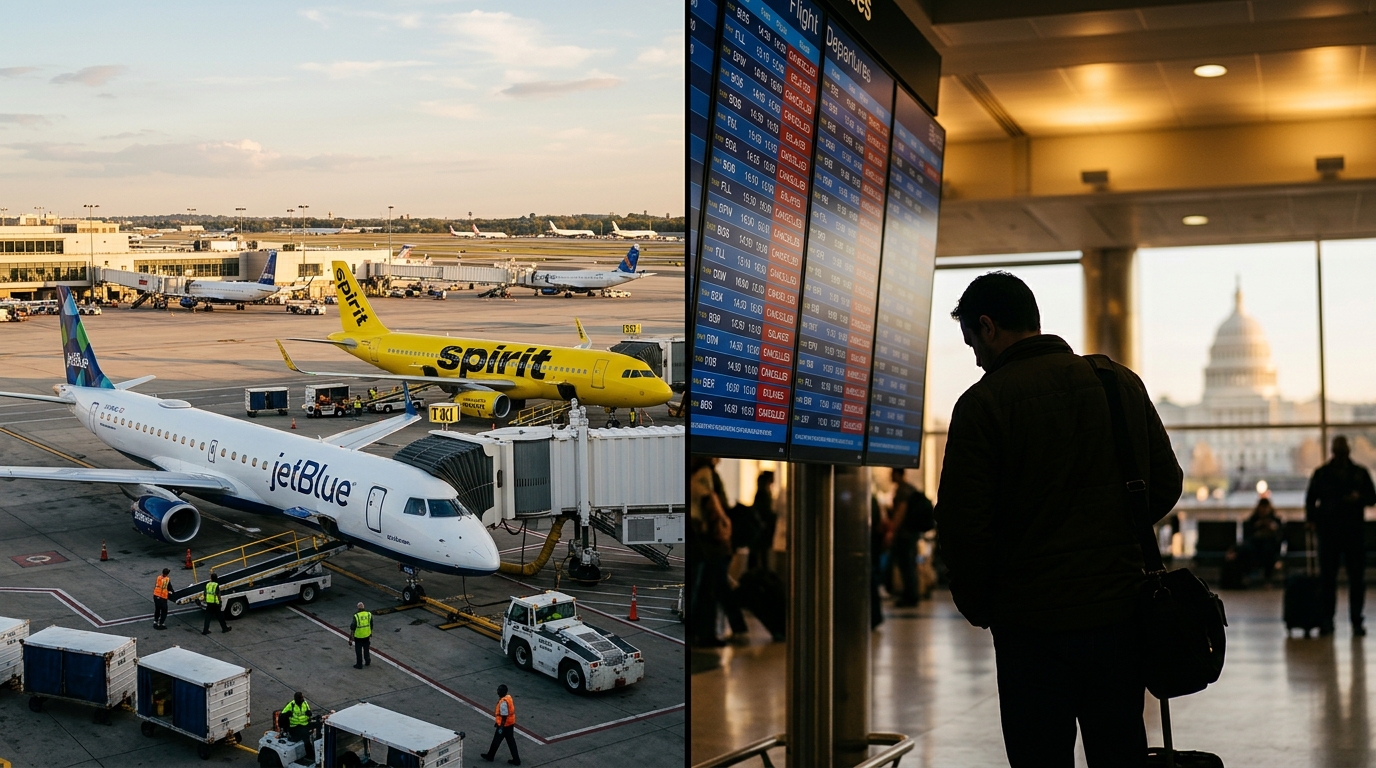
For anyone who's flown in or out of our busy DMV airports recently, the thought of fewer flight options or higher prices probably makes your stomach drop faster than a plane hitting turbulence. That's why a recent critique from former Congressman Sean Duffy about the Biden Justice Department's decision to block the Spirit-JetBlue merger is resonating with many, especially in the wake of what he described as an "airline collapse" [1]. Duffy didn't pull any punches, directly challenging the DOJ's antitrust actions. His main contention? That the administration's move to prevent the two budget carriers from joining forces might actually hurt consumers more than it helps, particularly when the airline industry is already facing significant challenges. For DMV residents who frequently navigate the terminals at Reagan National, Dulles International, or BWI Thurgood Marshall, this isn't just a political squabble; it's about the future of their travel plans and wallets.
The Merger That Wasn't: A Battle Over Competition
The proposed merger between JetBlue and Spirit Airlines was a big deal for the airline industry. JetBlue aimed to acquire Spirit, promising to transform the ultra-low-cost carrier's operations by refitting planes and improving service. The idea, from the airlines' perspective, was to create a stronger challenger to the "Big Four" carriers – American, Delta, United, and Southwest – which dominate a significant portion of the market. However, the Justice Department saw it differently. The DOJ argued that allowing the merger would reduce competition, leading to higher fares and fewer choices, especially for budget-conscious travelers. They filed an antitrust lawsuit to block the deal, asserting that the removal of Spirit, a prominent ultra-low-cost option, would harm consumers. A federal judge ultimately sided with the DOJ in January, effectively grounding the merger. You can learn more about federal antitrust enforcement on the Department of Justice's Antitrust Division website.Duffy's Critique: Timing and Impact
Former Congressman Duffy's criticism centers on the timing and perceived consequences of the DOJ's intervention. He reportedly "blasts" the Biden DOJ, suggesting that blocking the merger in the context of an "airline collapse" was misguided [1]. While the source doesn't detail which specific "airline collapse" Duffy referenced, the airline industry has faced immense financial pressures, bankruptcies, and operational challenges in recent years, from pandemic-era travel freezes to staffing shortages and rising fuel costs.The Biden Justice Department's move to block the Spirit-JetBlue merger has sparked debate over whether it helps or hurts consumers, especially amid ongoing airline industry challenges.
Duffy's perspective likely stems from the belief that consolidation, in some cases, can create more resilient companies capable of competing effectively against larger players, rather than eliminating competition. He seems to be arguing that in a vulnerable market, the government's role should be to foster stability and allow market forces to create stronger entities, rather than preventing unions that could offer a more robust alternative to the dominant airlines. Antitrust Decisions and DMV Air Travelers
For the millions of people living and working in the DMV, federal decisions like this one directly impact daily life. Our region is a hub for federal employees, military personnel, and business travelers, making air travel a frequent necessity. The debate over airline mergers boils down to a fundamental question for these residents: does less competition from mergers lead to higher prices and fewer routes, or does it create stronger airlines that can offer better service and more competitive fares in the long run? If the DOJ's stance is correct, blocking the merger should theoretically preserve a budget option, keeping fares lower. However, if Duffy's argument holds weight, preventing this merger might leave Spirit in a weaker position, potentially leading to its eventual decline and thus *reducing* options for travelers. The Metropolitan Washington Airports Authority oversees operations at Reagan National (DCA) and Dulles International (IAD), two critical gateways for DMV residents. Changes in airline structures invariably affect their operations and the services available to passengers. The broader implications extend beyond just ticket prices. It touches on route availability, the quality of service, and even the future employment landscape within the airline industry. As the aviation sector continues to evolve, understanding the nuances of these federal interventions becomes crucial for consumers. The Department of Transportation's consumer protection resources offer insights into passenger rights and airline responsibilities.What's Next for DMV Air Travelers?
The blocked Spirit-JetBlue merger is a clear signal from the Biden administration about its aggressive stance on antitrust enforcement, particularly in industries directly affecting consumers. For DMV residents, this means continuing to watch how these policies play out in the airline sector. Will Spirit find a path forward independently, or will the competitive landscape shift in other ways? The long-term effects on ticket prices, flight availability, and overall travel experience for those flying out of our local airports remain to be seen. Keep an eye on airline announcements and federal policy updates, as they'll directly shape your future journeys.Advertisement