Digital Footprints: How Biometric Surveillance and Smart Devices Challenge Privacy for DMV Residents
Share this article
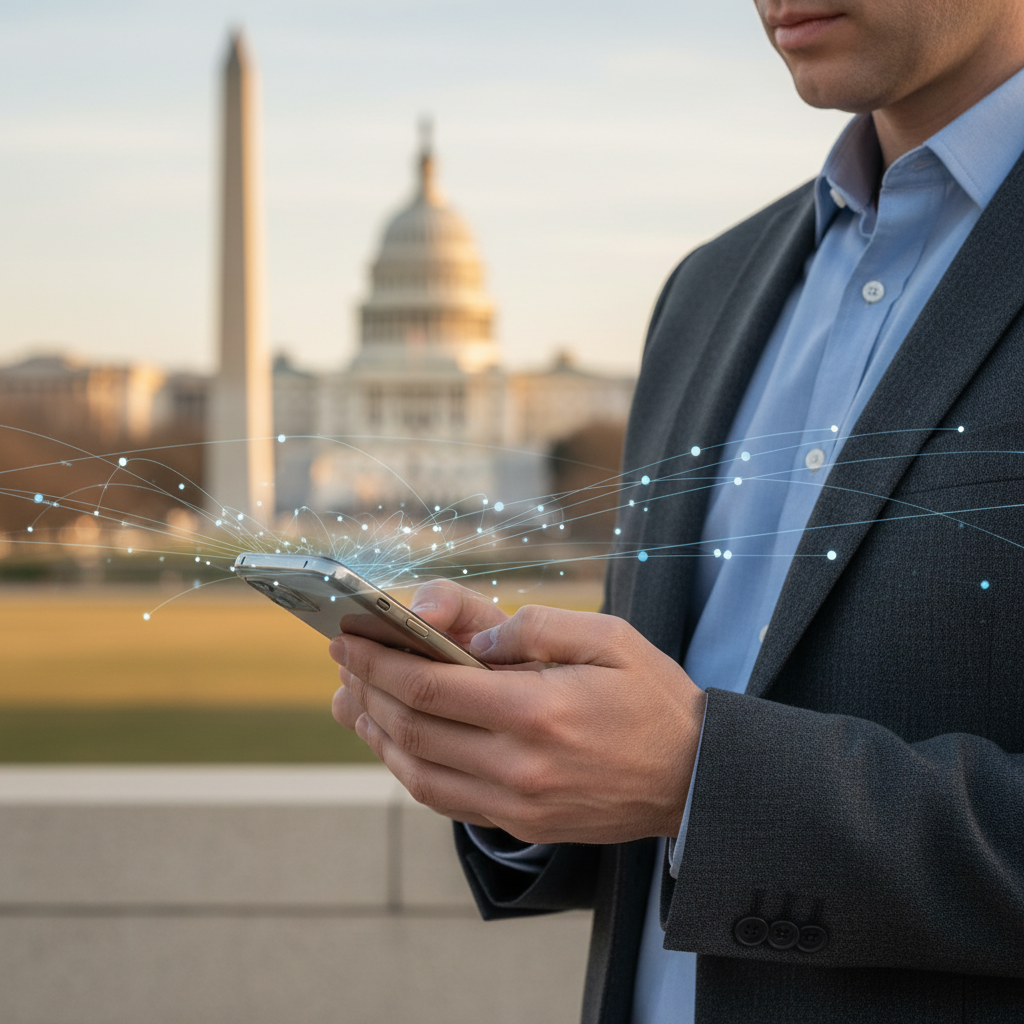
In an increasingly connected world, the very devices that simplify our daily lives—smartphones, fitness trackers, and even smart home assistants—are simultaneously creating a vast digital footprint that could compromise personal privacy, particularly concerning law enforcement access. For residents across Washington, D.C., Maryland, and Virginia, where federal employment is high and technology adoption is widespread, understanding these evolving threats to privacy is more critical than ever.
A recent analysis highlights how our attachment to smart devices and the proliferation of biometric surveillance leave individuals more vulnerable to police searches than ever before. This trend, if left unchecked, is projected to worsen, fundamentally altering the landscape of our Fourth Amendment rights [1].
The Ubiquitous Digital Trail
Every step, every search, every voice command contributes to an intricate web of personal data. From the GPS data logged by a running app to the facial recognition capabilities on our phones, or even the sound of our voice picked up by a smart speaker, these pieces of information are continuously collected. While often touted for convenience or security, they also represent a treasure trove for those seeking to build a case or investigate activities. The author Andrew Guthrie Ferguson, in an excerpt from his book "Your Data Will Be Used Against You," points out that this constant stream of data creates an unprecedented level of vulnerability [1].
This reality is particularly stark in the DMV region, where many residents work in sectors dealing with sensitive information, or simply navigate dense urban environments under constant surveillance from public and private cameras. The data generated by our personal devices can paint a detailed picture of our movements, associations, and even our state of mind, offering law enforcement what some describe as "unfettered access" to our digital lives, often without the traditional hurdles of probable cause or warrants that once protected physical privacy.
Fourth Amendment Under Strain
The Fourth Amendment to the U.S. Constitution traditionally protects individuals from unreasonable searches and seizures, requiring a warrant based on probable cause. However, the rapid advancement of technology has outpaced legal frameworks, creating gray areas concerning digital data. Courts and lawmakers are grappling with how to apply centuries-old principles to data that resides in the cloud, is generated passively, or is shared with third-party companies.
The core challenge lies in defining the expectation of privacy in a world where personal data is routinely shared, stored remotely, and accessible through various means. Legal experts and privacy advocates, such as the American Civil Liberties Union (ACLU), argue that without clear legal protections, this data can be accessed by law enforcement with fewer safeguards than those protecting physical belongings. The Department of Justice provides guidance on the Fourth Amendment, but its application to evolving digital realities remains a complex and often contested area.
Local Implications for DMV Residents
For individuals living and working in Washington, D.C., Maryland, and Virginia, these national trends have distinct local implications. The high concentration of federal employees means many residents are subject to various levels of background checks and security clearances, making privacy concerns even more salient. Additionally, local law enforcement agencies, including the Metropolitan Police Department (MPD) in D.C., and county police departments in Montgomery County, Maryland, and Fairfax County, Virginia, are continually evaluating and adopting new technologies for public safety. The balance between public safety and individual privacy is a constant debate.
The region's status as a technological hub, with numerous tech companies and startups, further complicates the issue. Many residents are early adopters of new gadgets and services, often without fully understanding the privacy implications of the data they generate and share. This makes the DMV area a microcosm for the broader national debate on digital privacy.
Safeguarding Your Digital Self
As the legal and technological landscapes continue to evolve, residents can take steps to protect their digital privacy. This includes being mindful of the permissions granted to apps, understanding privacy settings on devices and social media platforms, and regularly reviewing the data collected by services. Advocating for stronger privacy legislation and supporting organizations dedicated to digital rights also play a crucial role in shaping future protections.
The push for greater transparency from device manufacturers and data brokers, alongside robust legal frameworks, will be essential to ensure that convenience does not come at the cost of fundamental rights. Without proactive measures, the convenience of our smart devices could indeed continue to betray our right to privacy, making the digital world a less secure space for everyone.
📍 Local Resources
Advocates for civil liberties, including privacy rights, in Washington, D.C. Provides legal resources and information on digital surveillance.
Works to protect and advance civil liberties and civil rights for all Marylanders, including issues related to privacy and technology.
Dedicated to defending and preserving the individual rights and liberties guaranteed by the Constitution and laws of the United States and Virginia, including digital privacy.