Community
DDOT Launches AVO Zone Challenge to Monitor Autonomous Vehicles in DC
Share this article
Advertisement
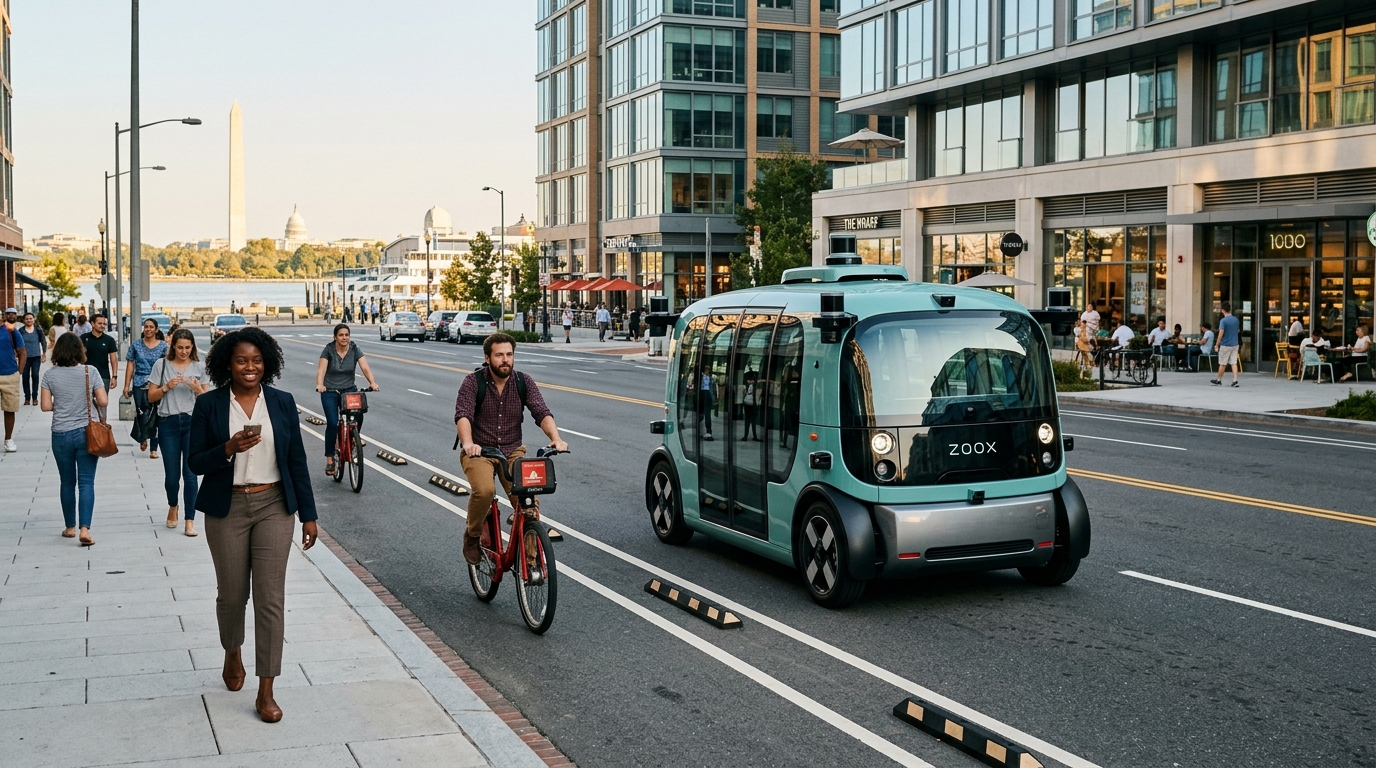
The future of transportation is quietly rolling through Washington, DC's streets, and the city wants to make sure it understands every turn, stop, and interaction. With autonomous vehicles (AVs) becoming an increasingly common sight, the District Department of Transportation (DDOT) is taking a proactive step to get a better handle on their presence. They've teamed up with national and local partners to launch an ambitious new initiative: the Autonomous Vehicle Observation (AVO) Zone Challenge, set to kick off in June 2026. This challenge isn't just about watching cars; it's about equipping the District with the tools and data necessary to integrate this emerging technology safely and effectively into its bustling, multimodal environment. It aims to find innovative ways to detect, monitor, and analyze how AVs operate on public streets, especially in dense urban areas like Southwest DC, where the Southwest Business Improvement District (SWBID) is a key partner in this effort [1].
This collaboration between DDOT, US Ignite, and SWBID positions Washington, DC, at the forefront of urban innovation in autonomous transportation. As the challenge progresses, local residents and businesses will want to keep an eye on how these monitoring efforts unfold and what new insights emerge, shaping the future of our city's roads.
Why DC Needs to Monitor Autonomous Vehicles
Anyone who navigates DC knows its unique transportation tapestry. From busy bike lanes and pedestrian-heavy sidewalks to Metro buses, streetcars, and a constant flow of personal vehicles, the city's roads are a complex ecosystem. Introducing autonomous vehicles into this mix presents both opportunities and challenges. Understanding their impact on traffic flow, public safety, and infrastructure is crucial for policymakers. The AVO Zone Challenge is specifically designed to address these complex questions. DDOT, alongside US Ignite and SWBID, wants to pilot solutions that can provide clear insights into AV activity. This includes everything from how AVs interact with cyclists and pedestrians to identifying any "safety-critical events" that might occur [1]."It reinforces the need for cities to build capacity to better understand and monitor how AVs operate in complex, real-world conditions."
"US Ignite is excited to partner with DDOT and SWBID on the AVO Zone Challenge right here in Washington, DC," said Nick Maynard, CEO of US Ignite. "This effort leverages cutting-edge transportation technologies to provide the necessary data to inform AV policies in the District and nationwide. It reinforces the need for cities to build capacity to better understand and monitor how AVs operate in complex, real-world conditions" [1]. The Search for Innovative Solutions
The core of the AVO Zone Challenge is a call for innovative organizations to bring their best ideas to the table. DDOT is looking for solutions capable of: * **Detecting and monitoring AV activity:** This means knowing where AVs are, when they're operating, and what they're doing. * **Analyzing interactions:** How do AVs behave around other road users – pedestrians, cyclists, delivery vehicles, and human-driven cars? * **Identifying safety-critical events:** Pinpointing moments that could pose a risk to public safety. * **Providing high-quality data:** The information gathered needs to be robust and reliable enough to support policy decisions, academic research, and public transparency [1]. Academic heavyweights like The George Washington University and the University of Washington are supporting the initiative, lending their expertise to help shape the research and data analysis components. Their involvement underscores the serious academic and policy implications of understanding autonomous vehicle integration in urban environments.What This Means for DC Residents
For those of us living, working, and commuting in the District, this challenge represents a commitment to thoughtful urban planning in the face of rapid technological advancement. Rather than passively observing, DDOT is actively seeking to shape how autonomous vehicles will fit into our daily lives. The insights gained from this challenge will directly inform future regulations, infrastructure adjustments, and safety protocols for AVs in DC. The collaboration with SWBID also suggests a localized approach, potentially focusing initial monitoring efforts within the Southwest quadrant. This could provide valuable, concentrated data from a specific urban setting, which can then be scaled or adapted to other parts of the city. Understanding how AVs perform in a dense, mixed-use district will be crucial for broader city-wide implementation. Organizations interested in participating in the AVO Zone Challenge can sign up to receive notifications and learn more. An information session is planned for June 2026, offering further details about how to get involved and contribute to this significant step in urban transportation innovation [1].📍 Local Resources
DC Department of Transportation (DDOT)
Official website for District transportation news, projects, and contact information.
🌐 Website: ddot.dc.gov
📞 Phone: (202) 673-6813 (Customer Service)
US Ignite
Non-profit partner in the AVO Zone Challenge, focusing on smart city technologies.
🌐 Website: us-ignite.org
🌐 AVO Challenge Info: us-ignite.org/avochallenge/
Southwest Business Improvement District (SWBID)
Local partner representing the Southwest DC community.
🌐 Website: swbid.org
📍 Location: 400 7th St SW, Washington, DC 20024
Advertisement