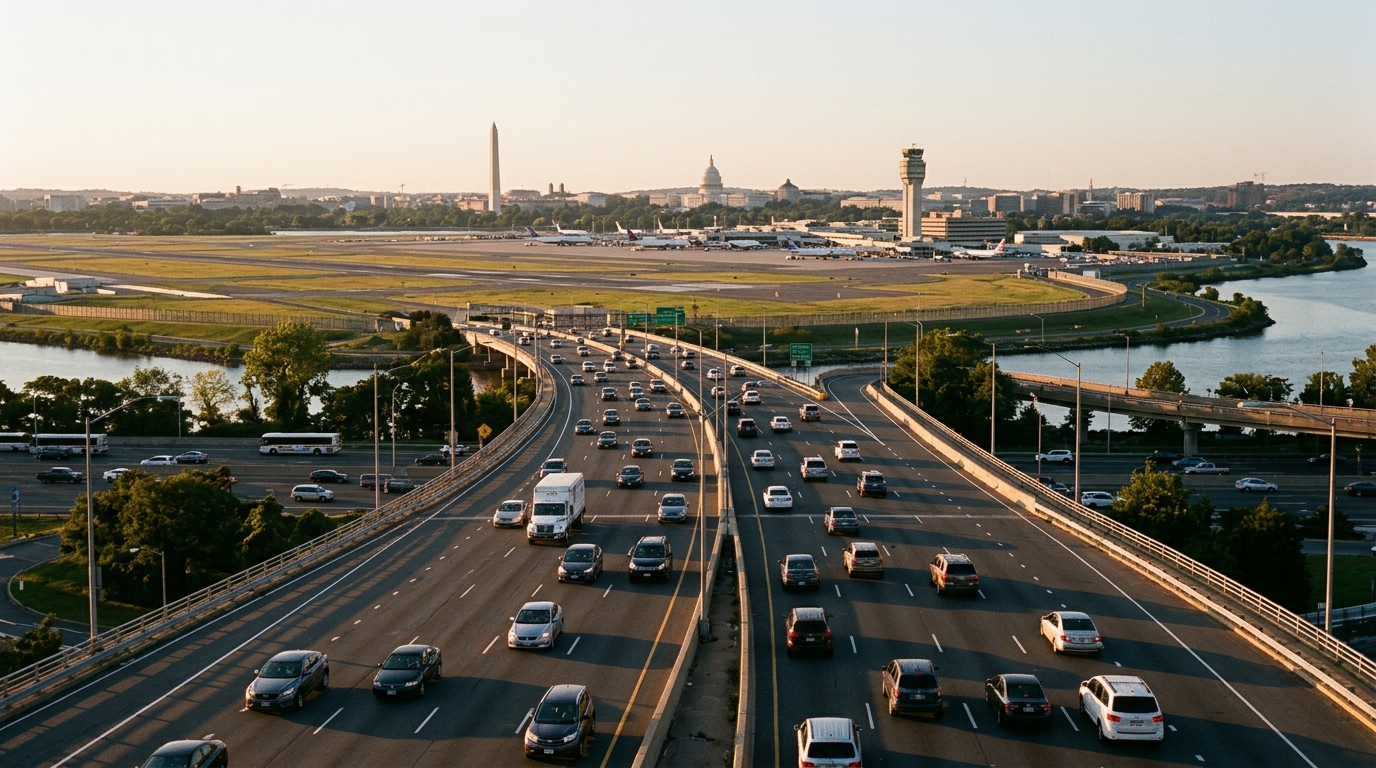
A new protocol is now in effect at Ronald Reagan Washington National Airport (DCA) to provide air traffic controllers with more advance notice when Marine One, the presidential helicopter, is preparing for takeoff. This significant operational adjustment comes in the wake of a safety incident last August involving communication lapses between the presidential aircraft and the airport, a situation that underscored the critical need for seamless coordination in the DMV's highly complex airspace. The incident, which occurred with President Donald Trump's helicopter, highlighted potential vulnerabilities in the existing communication framework surrounding high-stakes presidential movements. For an airport like DCA, nestled just across the Potomac from downtown Washington, D.C., every flight operation, especially those involving the President, demands an extraordinary level of precision and real-time information exchange.
The change follows an August safety incident involving communication issues between President Donald Trump’s helicopter and the airport just outside Washington.
### Navigating the Nation's Capital Airspace DCA operates within some of the most restricted and sensitive airspace in the world. Its close proximity to federal government buildings, national monuments, and military installations means air traffic control (ATC) manages a constant ballet of commercial flights, private aircraft, and critical government operations. The airspace is governed by stringent regulations enforced by the Federal Aviation Administration (FAA), particularly since the heightened security measures implemented after September 11, 2001. Marine One's movements are not typical flights. They involve layers of security provided by the U.S. Secret Service and are executed by the Marine Corps' HMX-1 squadron. These operations require precise timing and coordination with numerous agencies to ensure the President's safety and to minimize disruption to civilian air traffic. Any breakdown in communication, no matter how minor, can have cascading effects on safety and operational efficiency within this dense air corridor. ### The New Policy: Enhancing Warning Systems The core of the new policy is to provide DCA with "extra warning" when Marine One is preparing to lift off. This likely translates to an increased lead time for air traffic controllers to be notified, allowing them more time to clear airspace, adjust flight paths for incoming and outgoing commercial flights, and ensure all relevant personnel are aware of the presidential movement. Such a change suggests a refinement of the existing notification system, perhaps involving earlier alerts from the White House Military Office or specific military aviation units directly to DCA's air traffic control tower. This proactive measure aims to prevent future communication issues by building a larger buffer into the operational timeline, giving controllers more flexibility and reducing the potential for last-minute adjustments or unexpected conflicts. The Metropolitan Washington Airports Authority (MWAA), which oversees DCA, likely played a role in advocating for and implementing this enhanced coordination. ### The Critical Role of Communication in Air Traffic In air traffic management, communication is the bedrock of safety. Controllers rely on constant, clear, and timely exchanges of information with pilots and other control centers to maintain safe separation between aircraft. For presidential flights, this need is amplified by the unique security requirements and the national importance of the passenger. When communication issues arise, even briefly, they can lead to uncertainty for controllers, who must then act decisively to mitigate potential risks. This might involve holding other aircraft, rerouting flights, or issuing urgent warnings. The "extra warning" policy for Marine One aims to reduce the likelihood of such scenarios, allowing for a smoother integration of presidential flights into the regular flow of air traffic. ### What This Means for DMV Residents and Travelers For residents across the DMV, particularly those who frequently fly out of DCA, this policy change is a quiet but important step toward enhanced safety and operational predictability. While you might not notice a direct impact on your daily commute or flight schedule, the improved communication protocols contribute to the overall reliability and security of air travel in the region. It's a testament to the ongoing efforts by federal and local agencies to adapt and refine procedures in response to real-world incidents. This enhanced coordination between presidential security details and local air traffic control underscores the unique challenges of managing an airport like DCA. It reflects a continuous commitment to safety, ensuring that even the most high-profile and sensitive air movements are integrated as seamlessly and safely as possible into the bustling DMV airspace. Looking ahead, residents can expect these agencies to continue evaluating and refining protocols, especially in an environment as dynamic as the nation's capital. The focus remains on maintaining the highest standards of safety and efficiency for all air travelers and operations in the region.
📍 Local Resources for Air Travelers
Ronald Reagan Washington National Airport (DCA)
Official website for flight information, airport services, and operational updates.