September 11, 2026(Updated less than a minute ago)
4 min read
Share this article
Advertisement
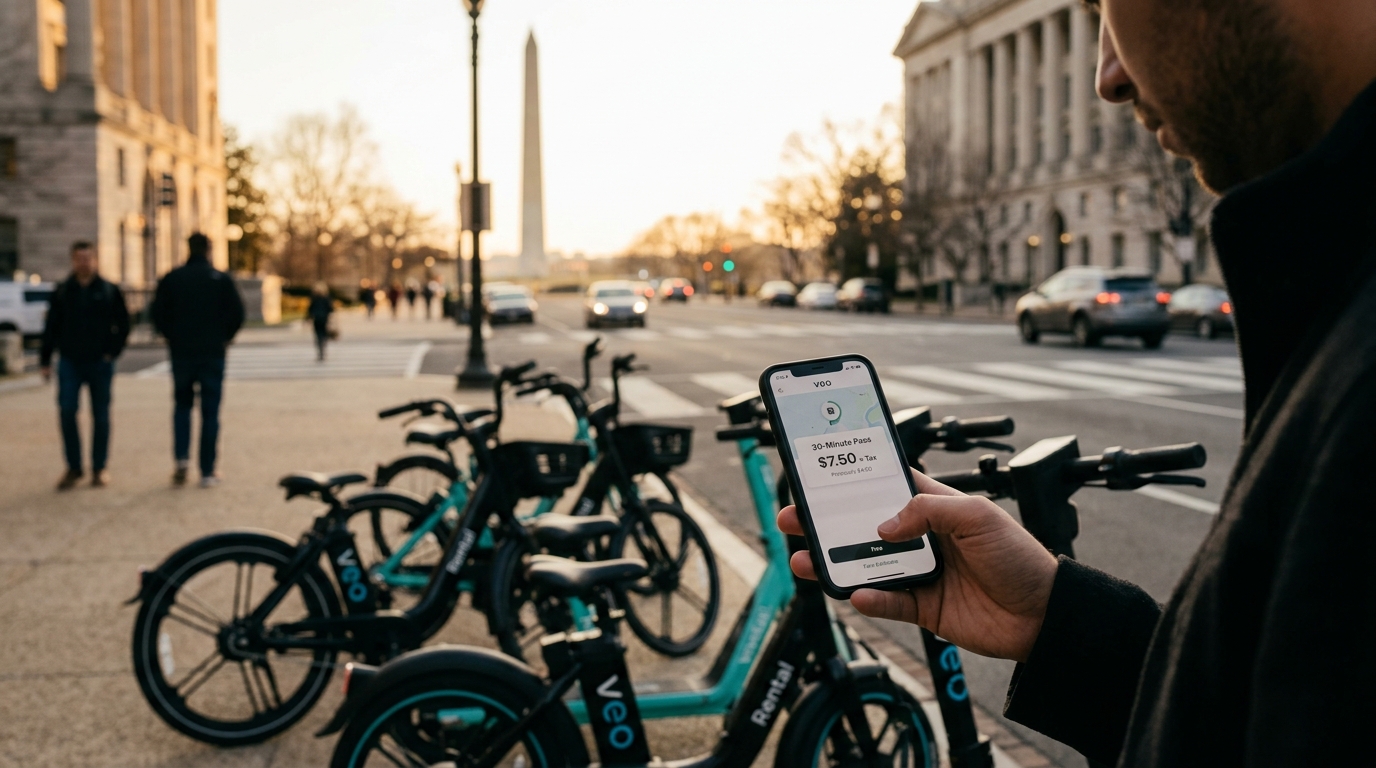
A sudden jump in the cost of Veo scooter and bike rentals has D.C. residents scratching their heads and checking their wallets. A local user recently brought attention to what appears to be a near-doubling of prices for a 30-minute pass, sparking concerns about affordability and the future of micro-mobility options in the nation's capital. The reported price hike, shared via a submission to PoPville, highlights a significant change for those who rely on Veo's electric bikes and scooters for short trips around the city. For many, these services offer a convenient and often more affordable alternative to taxis, ride-shares, or even public transit for the "last mile" of a commute.
A 30-minute Veo pass has reportedly seen its price nearly double for D.C. riders.
"Was wondering if you all / any readers noticed an increase in Veo prices?" a concerned rider wrote to PoPville. "A 30 minute pass has almost doubled in price (see screenshots)." The submission included images from the Veo app, illustrating the purported change. This observation points to a potentially impactful shift for thousands of daily users across neighborhoods from Columbia Heights to Capitol Hill. ### The Impact on Daily Commutes For many Washingtonians, shared micro-mobility services like Veo aren't just for leisurely rides; they're an integral part of navigating the city. Whether it's zipping from a Metro station to an office building in downtown D.C. or running errands through bustling neighborhoods, these electric vehicles provide a flexible and often eco-friendly way to get around. A substantial price increase could force many to reconsider their transportation choices, potentially pushing them back towards less sustainable or more congested options. The District Department of Transportation (DDOT) has actively promoted the use of dockless bikes and scooters as part of its broader strategy to reduce traffic congestion and encourage sustainable transportation. Companies like Veo operate under permits issued by DDOT, which aims to ensure these services are accessible and equitable for all residents. Any significant change in pricing directly impacts that accessibility. ### Speculation on Pricing Models The PoPville reader also raised questions about the reasoning behind the potential price adjustments. After some personal research, they noted an article about Veo's operations in Denver, where the company reportedly offers free rides. This led to speculation about whether D.C. riders might be subsidizing operations in other markets. "So now I am wondering if our prices went up to subsidize Denver and if this will continue happening??" the reader queried. While there's no official confirmation from Veo regarding its pricing strategy or any cross-market subsidization, such practices are not unheard of in the competitive world of tech-driven services. Companies often adjust pricing based on local market demand, operational costs, competition, and strategic business goals, which can vary widely from city to city. The micro-mobility industry has seen its share of ups and downs, with companies frequently adjusting their business models to achieve profitability while balancing rider demand and city regulations. These adjustments can include changes to unlock fees, per-minute rates, or the cost of subscription passes. ### What This Means for D.C. Residents For D.C. residents who rely on Veo, the reported price increase could mean re-evaluating their daily travel habits and budgeting. It underscores the importance of staying informed about service changes and exploring alternative transportation options. While Veo is a prominent player, other micro-mobility providers also operate in the District, offering bikes and scooters that might present different pricing structures. The District's commitment to multi-modal transportation means there are numerous ways to get around without a personal car. From the extensive Metro system (WMATA) to Capital Bikeshare and various bus routes, residents have a range of choices that can sometimes be more predictable in cost. As the city continues to grow and adapt, the role of shared micro-mobility services will remain crucial. Riders are encouraged to check their Veo app for the most up-to-date pricing in their area and to compare costs with other available options to ensure they're making the most economical choices for their commutes. Moving forward, it will be important to see if Veo or DDOT issues any official statements regarding these reported price changes and what, if any, impact it has on ridership and the broader micro-mobility landscape in the District.
📍 Local Resources
DC Department of Transportation (DDOT)
Information on D.C.'s transportation programs, including dockless vehicles and public transit.