DC U.S. Attorney Delays Appeal in Jeanine Pirro's Federal Reserve Subpoena Case
Share this article
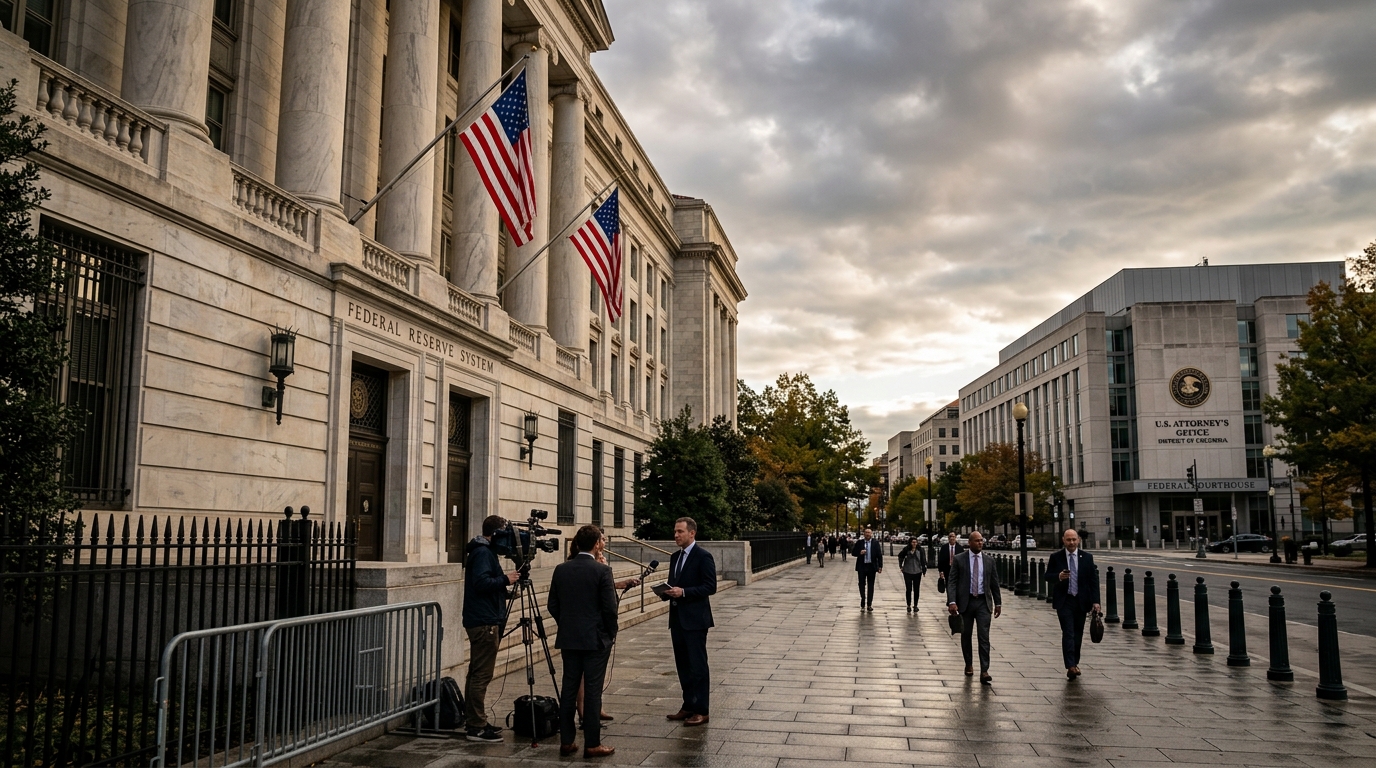
Washington, D.C. finds itself at the heart of a high-stakes legal standoff as the U.S. Attorney for the District of Columbia has yet to file a crucial appeal in a case involving former prosecutor Jeanine Pirro and subpoenas directed at the Federal Reserve. The delay comes after a judge’s ruling effectively quashed Pirro’s demands for information from the nation’s central bank, leaving the future of the "Powell probe" in limbo [1].
The Federal Reserve, an institution central to both national and global economic stability, maintains its headquarters just blocks from the National Mall, making any legal challenge against it a matter of significant local and federal interest. Similarly, the U.S. Attorney's Office for the District of Columbia, situated near Judiciary Square, plays a pivotal role in federal law enforcement and litigation within the capital, often handling cases with national implications.
The Heart of the Legal Dispute
The core of the issue revolves around subpoenas issued by Jeanine Pirro, reportedly as part of what has been dubbed the "Powell probe." While specific details regarding the exact nature of this probe remain largely undisclosed in public records, the issuance of subpoenas against the Federal Reserve suggests an attempt to compel the production of documents or testimony related to the institution's operations or decisions under its Chair, Jerome Powell [1]. Subpoenas are powerful legal tools, demanding individuals or entities provide evidence to a court or investigative body.
However, a judge's decision to quash these subpoenas represented a significant setback for Pirro's efforts. To "quash" a subpoena means to legally invalidate it, often because it is deemed overly broad, unduly burdensome, or lacking proper legal basis. This ruling effectively blocked Pirro's access to the requested information from the Federal Reserve, a move that could have profound implications for the scope and direction of her investigation.
The Stalled Appeal and its Implications for DC
Following the judge's decision, the U.S. Attorney for the District of Columbia had indicated a plan to appeal the ruling. An appeal would challenge the lower court's decision in a higher court, seeking to reinstate the subpoenas and allow the probe to proceed as initially intended. Such legal maneuvers are common in complex federal cases, reflecting the intricate checks and balances within the U.S. judicial system.
However, the key development, as reported, is the lack of action: the U.S. Attorney's Office has yet to file this planned appeal [1]. This delay introduces a layer of uncertainty into the proceedings. Legal processes are often bound by strict deadlines, and a "ticking clock" implies that there may be a finite window for the appeal to be filed. Failure to meet such a deadline could render the appeal impossible, permanently cementing the judge's decision to quash the subpoenas.
For residents of the District of Columbia and the broader DMV area, this situation underscores the constant interplay between federal agencies, legal oversight, and political figures that defines much of life in the nation's capital. The Federal Reserve, located at 20th Street and Constitution Avenue NW, is a visible and impactful presence, its decisions affecting everything from interest rates to inflation, which in turn touch upon local housing markets, employment, and business growth. The U.S. Attorney's Office, with its jurisdiction over federal crimes and civil matters in D.C., is a cornerstone of justice in the federal city. Delays or outcomes in such high-profile cases can influence public perception of government accountability and the effectiveness of legal processes.
The Federal Reserve's Role and Independence
The Federal Reserve operates with a degree of independence from direct political influence, a structure designed to allow it to make monetary policy decisions free from short-term political pressures. This independence is often fiercely guarded, and challenges to it, such as through subpoenas, can become contentious. Understanding the structure and functions of the Federal Reserve is crucial for appreciating the significance of legal actions targeting it.
The U.S. Attorney for the District of Columbia, appointed by the President and confirmed by the Senate, serves as the chief federal law enforcement officer for the nation's capital. This office is distinct from the District's Attorney General, which handles local D.C. matters. The U.S. Attorney's involvement in a case against the Federal Reserve highlights the federal nature of the dispute and its potential impact on governmental operations. More information on the U.S. Attorney's Office for the District of Columbia can be found on its official website.
What Lies Ahead?
The immediate future of this legal battle hinges on the actions, or continued inaction, of the U.S. Attorney for the District of Columbia. If the appeal is eventually filed, it will move to a higher court, where the arguments for and against quashing the subpoenas will be re-evaluated. If the deadline passes without an appeal, the judge's original ruling will stand, effectively ending that particular avenue for the "Powell probe" to compel information from the Federal Reserve.
This ongoing situation serves as a potent reminder of the complex legal landscape that defines governance in Washington, D.C. Federal agencies, legal offices, and judicial decisions constantly shape the environment, with each procedural step carrying weight for oversight, accountability, and the broader functioning of the federal government that so deeply impacts the DMV community. Residents and observers will undoubtedly be watching for any further developments from the U.S. Attorney's Office or the federal courts regarding this high-profile case.