Crime
Robbery Suspects Use Lime Bike for Getaway in Washington D.C., Police Say
Share this article
Advertisement
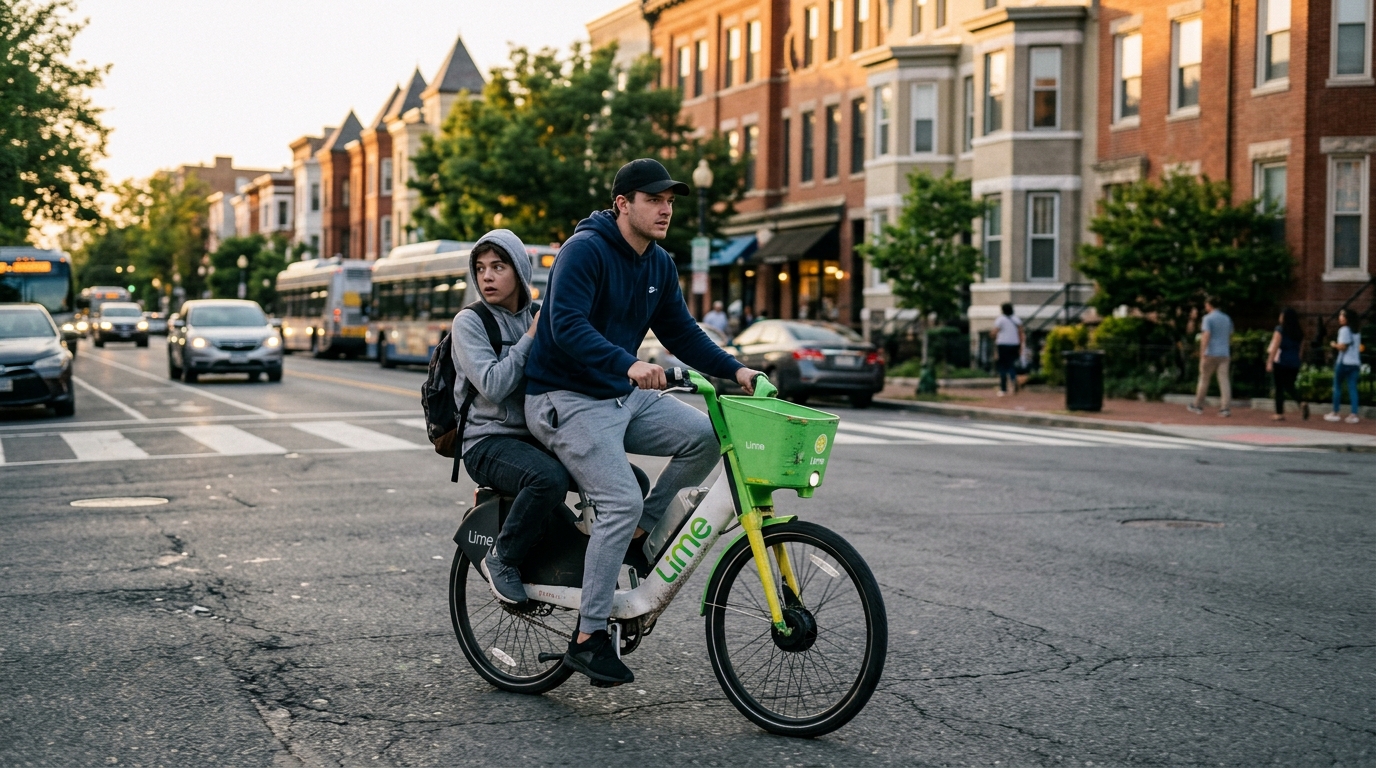
The familiar green and yellow of a shared Lime bike might be a common sight on Washington D.C.'s streets, but on one recent occasion, it allegedly served a more nefarious purpose: a getaway vehicle for robbery suspects. According to FOX 5 DC, Metropolitan Police Department (MPD) officials are investigating an incident where individuals suspected of robbery used one of the popular e-bikes to flee the scene. Details regarding the specific location of the robbery or the precise timing weren't immediately available, but the report highlights an unusual tactic in urban crime. While car chases and foot pursuits are standard fare for law enforcement, the use of a shared mobility device like a Lime bike presents unique challenges and underscores how criminals adapt to the urban landscape.
What does this mean for Washington D.C. residents going forward? It's a reminder that while shared mobility offers convenience, vigilance remains key. The MPD will continue its investigation, and residents should keep an eye out for any updates from local authorities as they work to bring those responsible to justice.
The incident highlights how criminals are adapting to Washington D.C.'s urban environment, utilizing readily available shared mobility options for quick getaways.
### The Rise of Shared Mobility and Crime Washington D.C. has embraced shared mobility services, with companies like Lime providing thousands of bikes and scooters across the city. These devices offer a convenient and often eco-friendly way for residents and tourists to navigate dense urban areas, bypassing traffic and parking woes. The District Department of Transportation (DDOT) oversees these programs, aiming to provide accessible transportation options for all residents, as detailed on their official website. However, the very accessibility and ubiquity that make these services popular can also make them attractive to those looking to evade capture. A Lime bike, which can be quickly unlocked via an app and left almost anywhere, offers a swift and anonymous mode of transport. It can weave through traffic, utilize bike lanes, and even navigate pedestrian-heavy areas where a car might be too conspicuous or slow. This incident isn't the first time shared mobility devices have been tangentially linked to crime, but using one as the primary escape vehicle for a robbery is certainly noteworthy. ### Challenges for Law Enforcement For the Metropolitan Police Department, incidents like this add another layer of complexity to investigations. While traditional vehicles have license plates and are often registered to specific owners, shared bikes are designed for transient use. Tracking a specific bike's movements can involve coordinating with the operating company, such as Lime, to access GPS data. This process, while possible, can introduce delays that are critical in the immediate aftermath of a crime. Police typically rely on a combination of eyewitness accounts, surveillance footage from businesses and public cameras, and forensic evidence to track down suspects. The MPD maintains a comprehensive crime data portal, reflecting their continuous efforts to monitor and combat criminal activity across the city. The integration of shared bike data into real-time police responses could become a growing area of focus for urban law enforcement agencies. ### Impact on Residents and Shared Services For residents of Washington D.C., news of such an incident can stir mixed feelings. On one hand, the convenience of shared bikes is undeniable. On the other, any association with criminal activity can raise concerns about public safety and the responsible use of these services. Shared mobility companies like Lime generally implement measures to deter misuse, but preventing every instance of criminal exploitation is a continuous challenge. Information on Lime's operations and safety guidelines can typically be found on their official website. This event serves as a reminder that the urban environment is constantly evolving, and so too are the methods employed by criminals. It underscores the importance of a vigilant community and the adaptability of law enforcement in responding to new challenges. As investigations proceed, the MPD will undoubtedly be looking into all available avenues, including any data that the shared bike company can provide, to identify and apprehend the individuals responsible. This incident, while seemingly minor in its mode of escape, speaks to the broader conversation about urban safety and how technology, intended for public good, can be co-opted for illicit purposes. Residents are encouraged to remain aware of their surroundings and report any suspicious activity to the authorities. 📍 Local Resources
Metropolitan Police Department (MPD) Non-Emergency
For non-emergency police assistance or to report a crime that is not actively in progress.
📞 Phone: (202) 727-9099
🌐 Website: mpdc.dc.gov
DC Victim Services Program
Provides support, advocacy, and resources for victims of crime in Washington D.C.
📞 Phone: (202) 727-1000
🌐 Website: ovsjg.dc.gov/page/victim-services-program
DC Crime Solvers
Allows individuals to submit anonymous tips about crimes to assist law enforcement.
📞 Phone: 1-800-673-2777
🌐 Website: mpdc.dc.gov/page/dc-crime-solvers
Advertisement