Crime
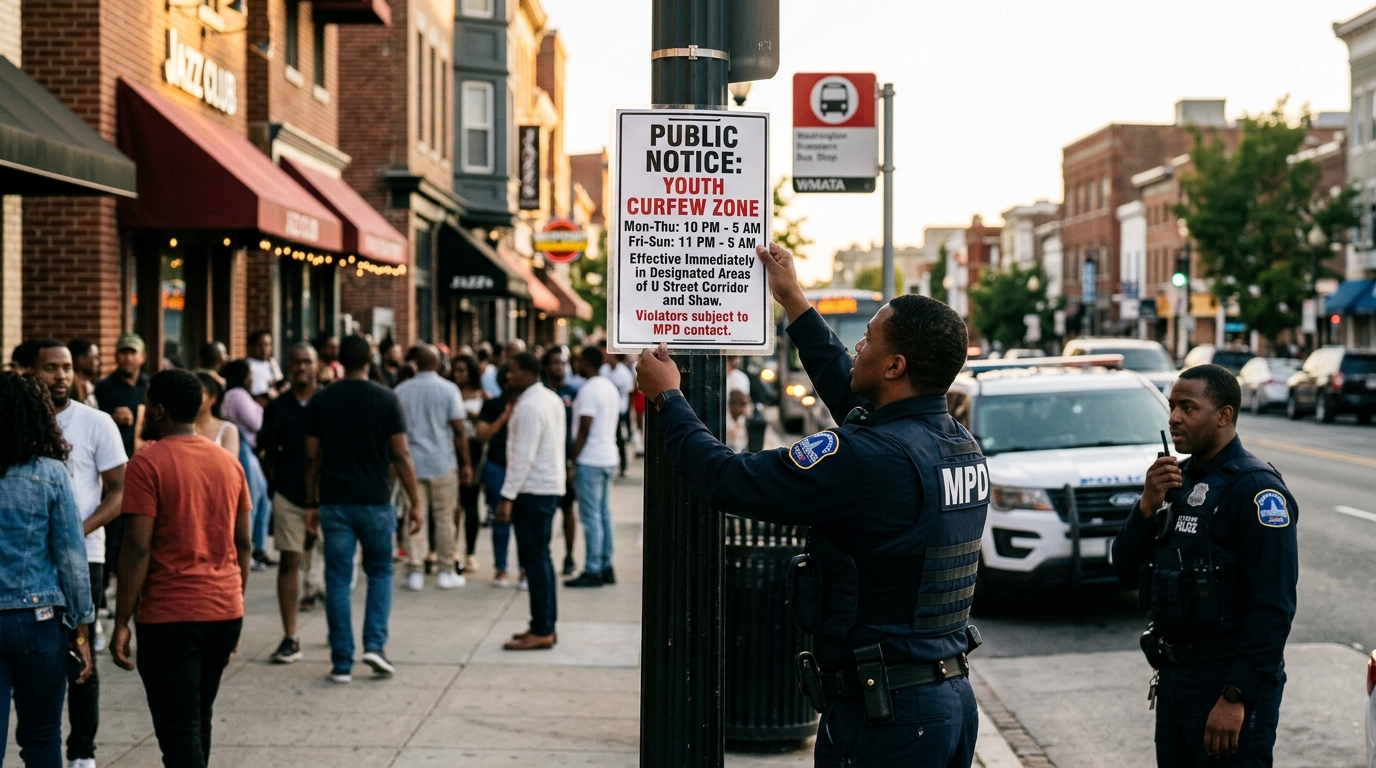
DC Police Announce Youth Curfew Zone for Historic U Street Corridor
Share this article
Advertisement
A familiar beat in the heart of Washington, D.C.'s U Street Corridor is about to change, at least for the city's younger residents. Metropolitan Police Department (MPD) officials recently announced the establishment of a new youth curfew zone specifically targeting the bustling U Street area [1]. This move aims to reshape nighttime activities in a neighborhood celebrated for its vibrant music history, diverse dining, and lively entertainment venues. The announcement, though brief [1], signals a focused effort by law enforcement to manage public safety and youth presence in a high-traffic urban environment. For parents, businesses, and young people across the District, it means understanding how existing city-wide curfew regulations will now be applied with heightened attention to this iconic stretch of Northwest D.C.
Understanding D.C.'s Youth Curfew Laws
While the concept of a "curfew zone" might sound new, Washington, D.C., already has established laws regarding youth curfews. Generally, these rules apply to individuals under the age of 17. On weekday nights (Sunday through Thursday), minors are typically required to be off public streets and out of public places between 11:00 PM and 6:00 AM. On weekend nights (Friday and Saturday), this curfew extends to midnight, running until 6:00 AM. There are, of course, exceptions to these rules, designed to ensure that young people can still participate in necessary and supervised activities. Minors are generally exempt from curfew if they are: * Accompanied by a parent, guardian, or an adult over 21 authorized by a parent. * Engaged in an emergency. * Going to or from work, or participating in a work-related activity. * Attending an official school, religious, or recreational activity supervised by adults, or traveling to or from such an event. * On the sidewalk abutting their residence or the residence of a next-door neighbor, with that neighbor's permission. * Exercising their First Amendment rights, such as attending a protest, under adult supervision. These exemptions are crucial context for any curfew enforcement, ensuring that the policy targets unsupervised loitering rather than legitimate activities. The full details of these regulations can be found on the D.C. Official Code website, outlining the specific parameters and penalties.The Pulse of the U Street Corridor
The U Street Corridor, often called "Black Broadway," is steeped in history and culture. From its origins as a hub for African American arts and commerce in the early 20th century, hosting legendary figures like Duke Ellington and Langston Hughes, to its modern-day resurgence, U Street remains a dynamic destination. Today, it's a magnet for residents and tourists alike, boasting a lively mix of restaurants, bars, music venues like the 9:30 Club and the Lincoln Theatre, and boutique shops. This constant energy, however, can also bring challenges. Large crowds, especially on weekend evenings, can sometimes lead to public safety concerns, prompting local authorities to seek solutions that maintain the area's vibrancy while ensuring order. The decision to designate a youth curfew zone specifically for U Street suggests that officials believe a more concentrated approach is necessary here.The U Street Corridor has been a cultural and entertainment landmark for over a century, attracting diverse crowds that contribute to its unique atmosphere.
Why Target a Curfew Zone?
While the police announcement didn't delve into the specific data or incidents that prompted this new zone, youth curfews are generally implemented with several goals in mind. Cities often turn to curfews to reduce juvenile crime and victimization, prevent unsupervised gatherings that could escalate, and promote public safety. The idea is that by limiting the presence of unaccompanied minors in public spaces during late hours, communities can deter potential conflicts and ensure young people are home and safe. Local leaders and community groups frequently weigh the benefits of enhanced safety against concerns about potentially over-policing youth or infringing on civil liberties. The effectiveness of curfews is a topic of ongoing debate, with some studies suggesting they can reduce crime, while others argue their impact is minimal and can disproportionately affect certain populations. For more on the Metropolitan Police Department's community engagement efforts, residents can visit the MPD Community Engagement page.Enforcement and Community Dialogue
When a minor is found in violation of D.C.'s curfew laws, MPD officers typically follow a protocol that prioritizes parental notification and intervention. The initial steps often involve taking the minor to a designated safe place, such as a police station or community center, and contacting their parent or guardian. Repeated violations or severe circumstances can lead to fines for parents or guardians, though the primary goal is usually to ensure the child's safety and return them home. The implementation of a specific curfew zone in U Street will likely prompt increased police presence and vigilance in the area during late hours. It also underscores the importance of ongoing dialogue between MPD, community leaders, businesses, and residents. Understanding the community's concerns and how this new policy will be enforced equitably will be key to its success and acceptance. Resources for youth and families are available through the DC Office of Youth Programs, which supports various initiatives for young people across the city. This targeted approach in the U Street Corridor is a significant development for one of D.C.'s most iconic neighborhoods. Residents and visitors, especially those with younger family members, should stay informed about the specifics of this new zone as more details emerge from MPD. Understanding the rules, knowing the exemptions, and engaging with local community efforts will be vital as the District navigates this change.📍 Local Resources
Metropolitan Police Department (MPD)
Non-emergency services and general information regarding D.C. laws and enforcement.
📞 Phone: (202) 727-9099
🌐 Website: mpdc.dc.gov
📍 Location: 300 Indiana Ave NW, Washington, DC 20001
🕐 Hours: 24/7 for non-emergency calls
Advertisement