Courts
Howard County
DC Judge Apologizes for 'Disturbing' Treatment of WHCD Suspect
Share this article
Advertisement
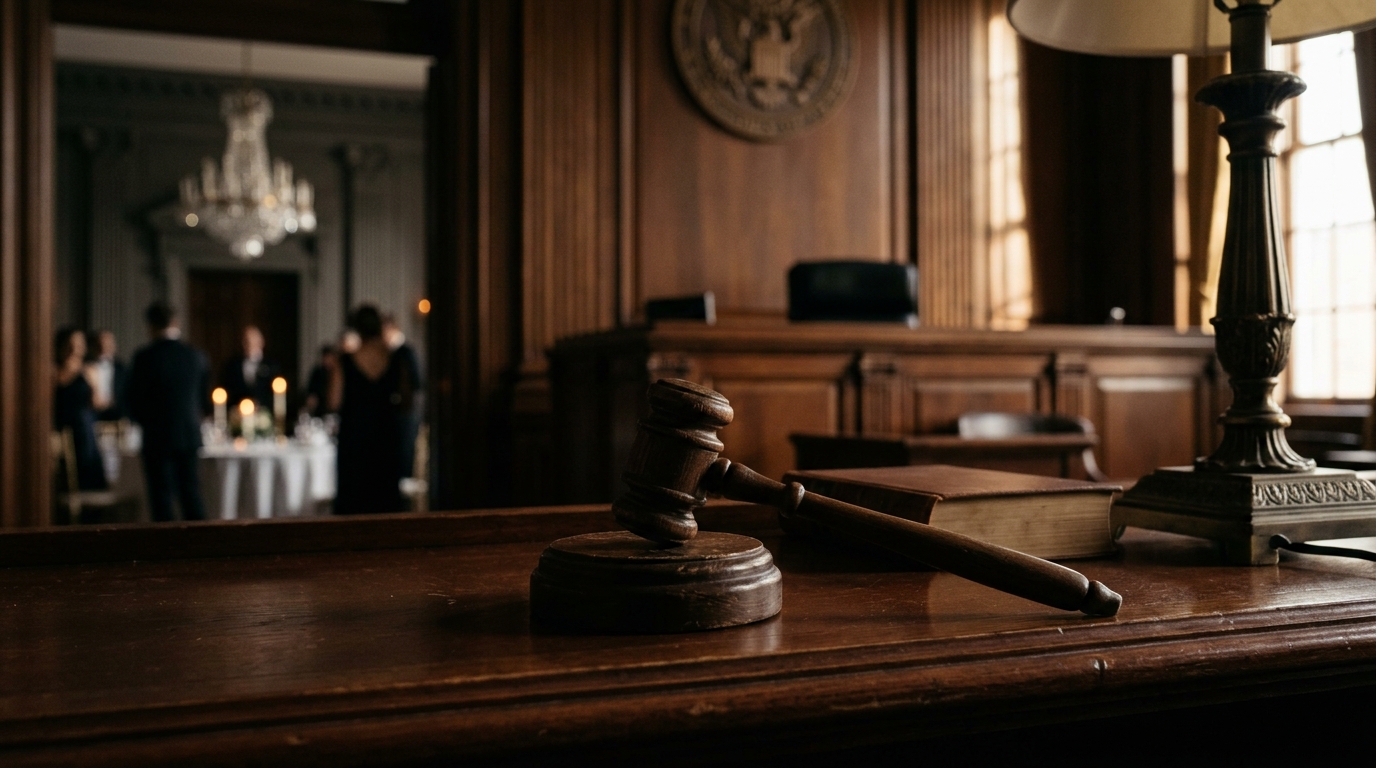
In a rare judicial display within a Washington, D.C. courtroom, a federal judge has issued a public apology to an individual arrested in connection with an incident at the White House Correspondents' Dinner. The apology, reportedly stemming from "disturbing" treatment during the arrest or detention, was delivered from the bench of the U.S. District Court for the District of Columbia [1]. This unusual step underscores significant concerns about the suspect's treatment and highlights the judiciary's commitment to ensuring fair process. While specifics regarding the suspect and the exact nature of the alleged mistreatment remain undisclosed, the judge's acknowledgment signals a potential procedural or conduct issue that the court deemed serious enough for direct regret. For residents of Washington, D.C., such an action can prompt questions about the initial incident while offering reassurance that the justice system can address its own shortcomings.
Judges serve as impartial arbiters, responsible for safeguarding due process and enforcing legal standards. An apology from the bench transcends mere courtesy; it represents an official admission that an individual's rights or dignity may have been compromised in a manner falling short of acceptable legal and ethical conduct. This acknowledgment is particularly noteworthy in Washington, D.C., a city where high-profile events like the White House Correspondents' Dinner, organized annually by the White House Correspondents' Association, attract considerable public and media attention [2]. The dinner itself convenes prominent figures from journalism, politics, and entertainment, often making news for reasons beyond the speeches delivered [3]. This particular incident, however, has brought the legal proceedings surrounding a guest into the courtroom spotlight, leading to an unprecedented apology.
The Significance of a Judicial Apology
Judges serve as impartial arbiters, responsible for safeguarding due process and enforcing legal standards. An apology from the bench transcends mere courtesy; it represents an official admission that an individual's rights or dignity may have been compromised in a manner falling short of acceptable legal and ethical conduct. This acknowledgment is particularly noteworthy in Washington, D.C., a city where high-profile events like the White House Correspondents' Dinner, organized annually by the White House Correspondents' Association, attract considerable public and media attention [2]. The dinner itself convenes prominent figures from journalism, politics, and entertainment, often making news for reasons beyond the speeches delivered [3]. This particular incident, however, has brought the legal proceedings surrounding a guest into the courtroom spotlight, leading to an unprecedented apology.
Advertisement