D.C. Council Advances Permanent Youth Curfew, Declines Emergency Power Extension
Share this article
Initial Approval for Permanent Curfew
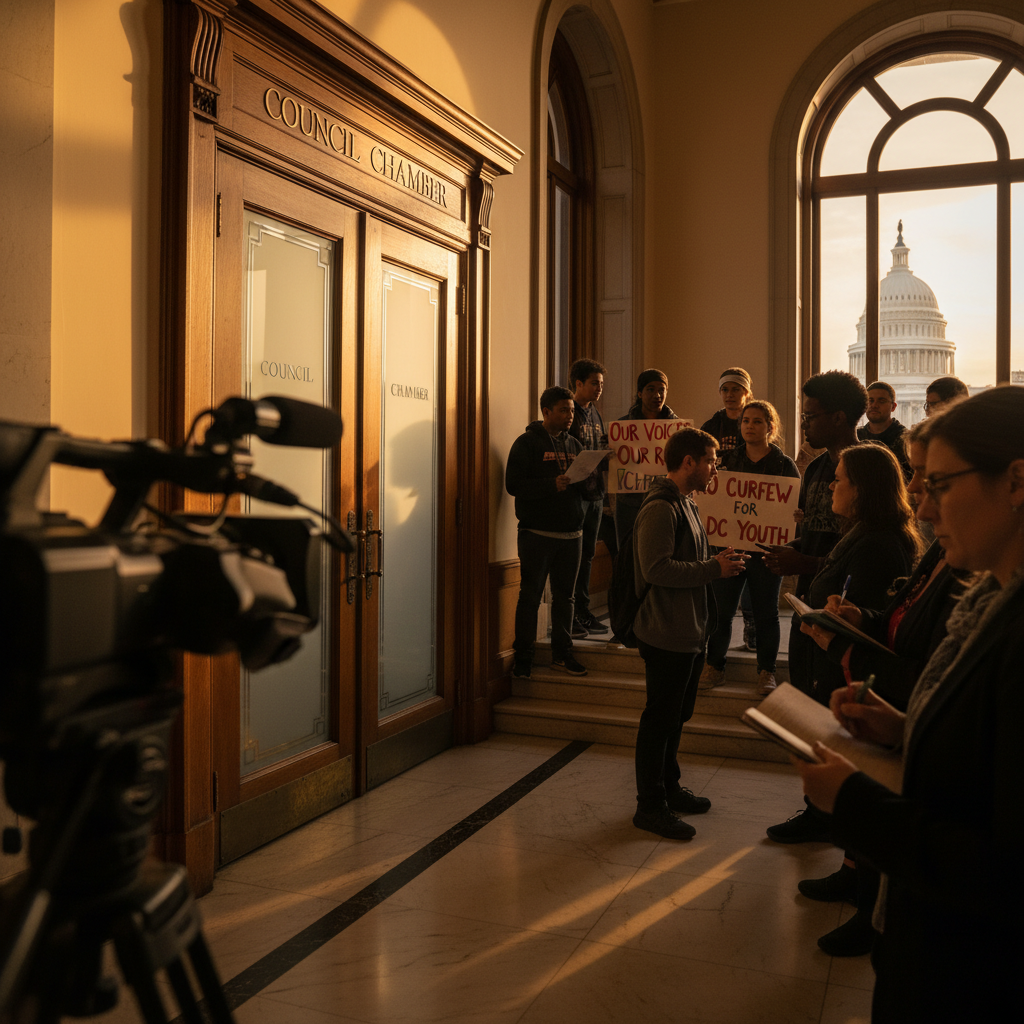
The D.C. Council's initial approval for a permanent youth curfew initiates a legislative path that, if fully enacted, would establish a lasting framework for regulating the hours during which minors can be in public without adult supervision. In the District's legislative process, "initial approval" means the bill has passed its first reading and typically requires a second vote by the full Council before being sent to the Mayor for signature or veto. Should it pass a second vote and receive mayoral approval, or if a mayoral veto is overridden, the measure would become law, providing a consistent policy for years to come. This move reflects an ongoing discussion within the District regarding youth safety and crime prevention. Proponents of such measures often argue that curfews can deter juvenile crime and enhance public safety by keeping young people off the streets during hours when they might be more vulnerable or susceptible to engaging in illicit activities. The specifics of the curfew, such as age limits, hours of enforcement, and exceptions for work or school activities, would be detailed within the approved legislation. Residents can monitor the status of D.C. legislation through the Council of the District of Columbia's official website.Non-Extension of Emergency Powers
Concurrently with the curfew vote, the D.C. Council opted not to extend certain emergency powers. These powers typically grant the Mayor or other executive branches expanded authority to address pressing issues, often related to public health, safety, or civil unrest, by streamlining decision-making and bypassing some standard legislative procedures. The non-extension suggests that the Council believes the city's current challenges no longer necessitate such an elevated level of executive control. Historically, emergency powers have been invoked in various scenarios, from public health crises to significant crime surges. The decision to revert to standard governance procedures implies a return to a more conventional balance of power between the legislative and executive branches, as outlined by the District of Columbia Home Rule Act. This could be interpreted as a sign of confidence in the city's ability to manage its affairs under normal operational guidelines, or a preference for legislative oversight in policy implementation. The District's overall public safety strategy continues to be a central focus for both the Council and the Mayor's office, with data on crime trends regularly available from the Metropolitan Police Department.Implications for Washington, D.C. Residents
The dual actions by the D.C. Council carry significant implications for the city's residents, particularly youth and their families. A permanent curfew would necessitate adjustments to daily routines and recreational activities for minors, requiring greater parental supervision and awareness of the established hours. Enforcement of such a curfew would also engage the Metropolitan Police Department, potentially shifting resources and interactions with the community. The decision not to extend emergency powers, while perhaps less immediately visible, reflects a broader governmental philosophy. It indicates a move away from crisis-driven policy-making towards a more deliberate, legislative approach to urban challenges. For businesses, especially those operating late hours, the permanent curfew could influence foot traffic and operational considerations, though its direct economic impact would depend on specific enforcement and community response. The District's commitment to youth development and public safety remains a priority, with numerous programs and services available to support young residents and foster a secure environment.📍 Local Resources for Youth & Families in Washington, D.C.
Provides supervision, care, and rehabilitation to committed youth, focusing on public safety and positive youth development.
Offers legal services and advocacy for D.C. children and families, focusing on health, education, and safe housing.
Explore more on this topic
Related Stories
Councilmember Janeese Lewis George Urges Caution on Waymo Legislation, Citing DC's Jobs Crisis
Ward 4 Councilmember Janeese Lewis George has urged the DC Council to pump the brakes on Waymo legislation this year, warning that rushing autonomous vehicle laws could worsen the city's "jobs crisis" by displacing workers. She emphasizes the need to prioritize safety and worker support alongside technological advancement.
Ousted Board of Appeals Chair Sues Howard County Council, Office of Law
Howard County's ousted Board of Appeals chair has filed a lawsuit against the County Council and the Office of Law, initiating a significant legal challenge within the local government structure. This action highlights internal administrative disputes and brings the county's appointment and oversight processes into public scrutiny.