September 11, 2026(Updated less than a minute ago)
4 min read
Share this article
Advertisement
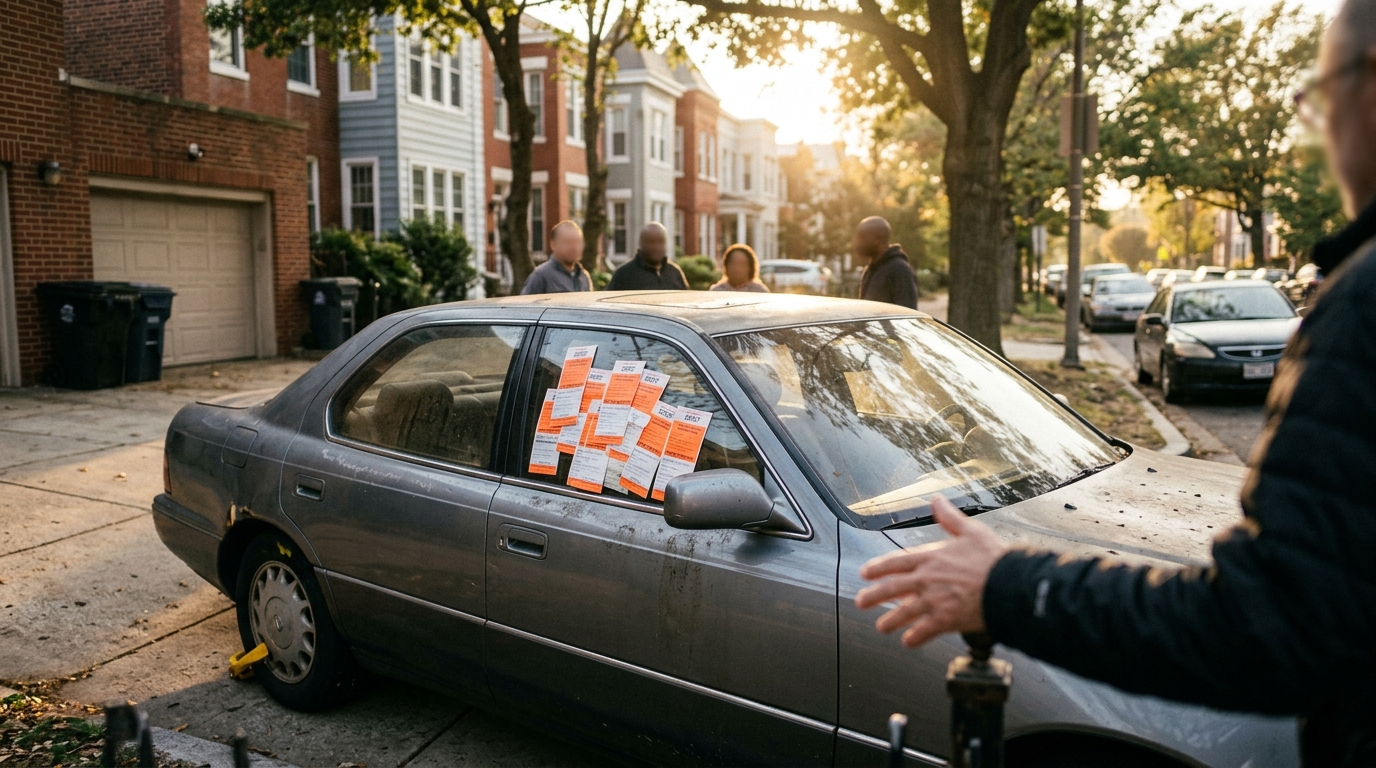
A black sedan, seemingly abandoned, has become a symbol of parking frustration in Washington, D.C., accumulating a stack of tickets on its windshield while brazenly blocking a private driveway. The incident, captured in a series of striking images, highlights the ongoing battle many city residents face with illegal parking and the often-slow process of enforcement. The car, which appears to be a luxury model, was photographed with numerous bright orange tickets tucked under its wiper blades, a visual testament to a prolonged parking violation. Adding to the scene, a handwritten note from exasperated neighbors was visible on the windshield, starkly stating: "You are Blocking our Driveway!" This direct plea underscores the daily inconvenience and disruption such actions cause for those living in dense urban neighborhoods. **The Persistent Problem of Blocked Driveways** Blocking a driveway isn't just a minor infraction in the District; it's a significant disruption to daily life. For residents, it means being unable to leave or return to their own property, impacting commutes, errands, and even emergency access. The sheer number of tickets on this particular vehicle suggests that the car has been in violation for an extended period, leading to a build-up of fines and a growing sense of helplessness among those affected. The District Department of Public Works (DPW) is responsible for enforcing parking regulations across the city, including those related to blocked driveways. According to D.C. municipal regulations, parking in front of a public or private driveway is strictly prohibited and carries a substantial fine. Yet, despite repeated ticketing, this vehicle remained unmoved, prompting questions about the threshold for towing.
Parking in front of a public or private driveway in D.C. is strictly prohibited, carrying significant fines and the risk of towing.
Neighbors often resort to leaving notes, calling 311, and repeatedly reporting violations, hoping that persistent enforcement will eventually lead to the vehicle's removal. This particular incident, documented on the popular local blog Popville, encapsulates the frustration felt by many. **When Does a Car Get Towed in D.C.?** The process for towing illegally parked vehicles in D.C. involves a series of steps, and the time it takes can vary. Generally, a vehicle can be ticketed immediately for a violation like blocking a driveway. However, towing typically occurs after a certain number of tickets or after a specific period of being illegally parked, especially if it's deemed a public nuisance or safety hazard. For vehicles blocking a driveway, DPW can initiate a tow, but it often requires multiple reports and a backlog of tickets. The owner of a towed vehicle faces not only the accumulated parking fines but also towing fees and daily storage charges at the impound lot. These costs can quickly add up, turning a few parking tickets into a hefty sum. The challenge for the city lies in balancing the immediate needs of residents with the logistical complexities of enforcement. D.C.'s streets are notoriously congested, and finding available tow trucks and impound space can be a constant struggle. This often leads to situations like the one observed, where a vehicle accumulates numerous tickets before finally being removed. **Navigating D.C.'s Parking Landscape** This incident serves as a stark reminder of D.C.'s challenging parking environment. With a growing population and limited street space, parking scarcity is a perennial issue, leading some drivers to take risks or simply disregard regulations. However, the impact on residents, particularly those whose property access is impeded, is significant. Residents are encouraged to report illegal parking promptly using the city's 311 service, either by phone, online, or through the 311 mobile app. Providing clear details, including the vehicle's license plate number, location, and the nature of the violation, can help expedite the enforcement process. While the response time can sometimes be frustrating, consistent reporting is crucial for city officials to track and address these issues. The saga of the ticket-laden sedan blocking a driveway in D.C. is a microcosm of a larger urban challenge. As the city continues to grapple with parking demands, residents will undoubtedly keep a close eye on how quickly — or slowly — such persistent violations are resolved. The question remains: how many more tickets will it take before this particular vehicle finally gets towed?
📍 Local Resources for Parking Enforcement
DC 311 Service Center
Report illegal parking, blocked driveways, and other non-emergency city service requests.