Cinder Bed Road Bikeway Critics Rally at Franconia Governmental Center Opening in Fairfax County
Share this article
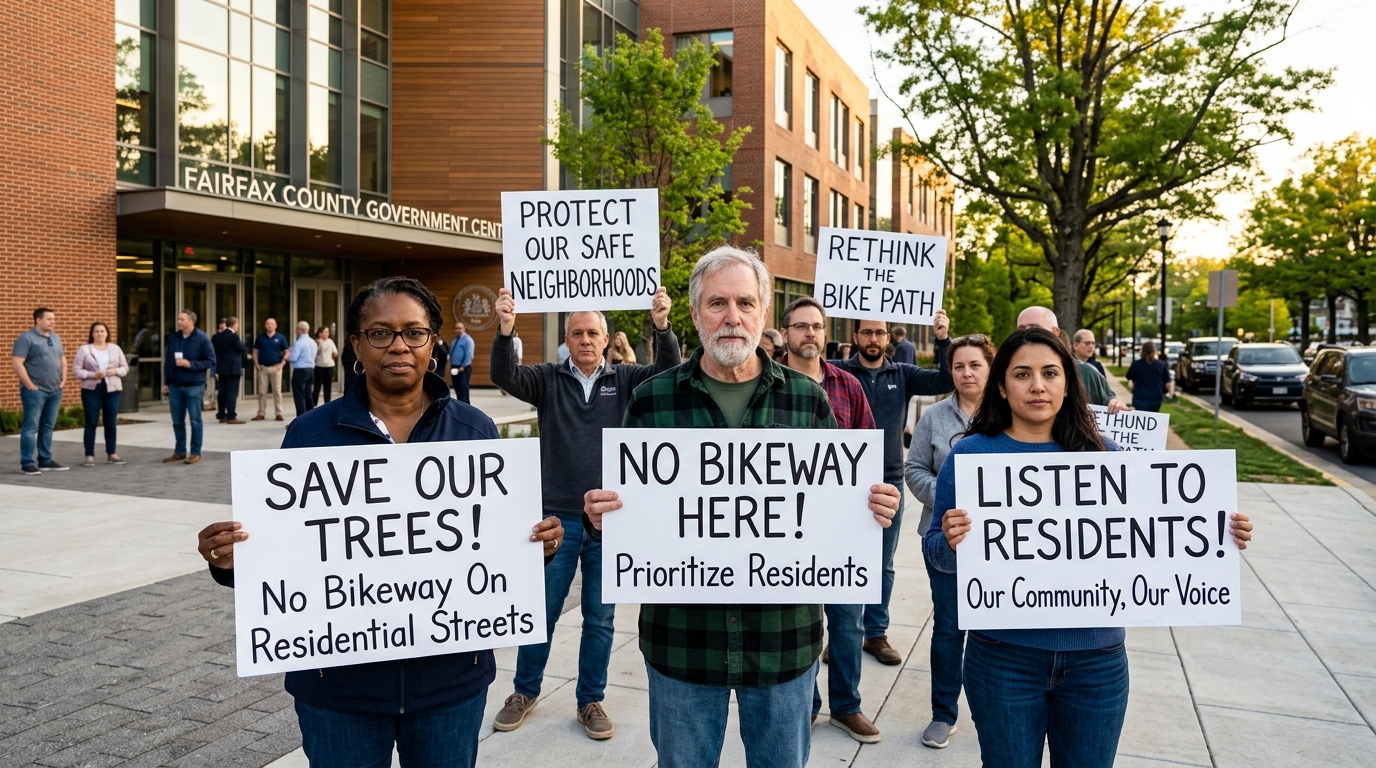
Fairfax County, VA – Opponents of the proposed Cinder Bed Road Bikeway seized a high-profile opportunity on April 11, 2026, to voice their objections, staging a rally outside the dedication ceremony for the new Franconia Governmental Center [1]. The demonstration underscored the ongoing community debate surrounding local infrastructure projects and the balance between development and resident concerns in the rapidly growing DMV region.
The event, meant to celebrate a significant civic addition to Franconia, became a focal point for residents critical of the bikeway project. The gathering highlighted the determination of community groups to ensure their perspectives are heard by local officials, even on occasions not directly related to the contested development.
A Gathering of Concern in Franconia
The dedication of the Franconia Governmental Center, a new hub for local services and community engagement, attracted numerous residents and officials. Amidst the celebratory atmosphere, critics of the Cinder Bed Road Bikeway positioned themselves to capture the attention of those attending. According to FFXnow, lines of citizens waiting to enter the new center provided a captive audience for the protestors' message [1]. This strategic timing allowed opponents to directly engage with community members and local leaders present for the dedication, amplifying their message beyond typical public meeting forums.
The Cinder Bed Road Bikeway: A Point of Contention
The Cinder Bed Road Bikeway project, like many proposed infrastructure developments in Fairfax County, aims to enhance pedestrian and cyclist connectivity. Such projects are often part of broader county initiatives to promote alternative transportation, reduce traffic congestion, and improve public health through active living. However, they frequently encounter resistance from segments of the community who raise concerns about various impacts.
While specific grievances of the Cinder Bed Road Bikeway opponents were not detailed in reports from the protest, common concerns surrounding bikeway developments in the DMV area include potential environmental impacts, such as tree removal or disruption to natural habitats. Residents also often express worries about the loss of private property through eminent domain, increased traffic congestion if road lanes are repurposed, or safety implications for both cyclists and pedestrians in mixed-use pathways. The financial cost to taxpayers and the perceived necessity of a project are also frequently debated points during public comment periods for Fairfax County transportation projects.
Community Voices in Local Planning
Fairfax County has a robust framework for public engagement in its planning and development processes. Residents are encouraged to participate in public hearings, attend community meetings, and provide feedback directly to their District Supervisors and the Fairfax County Board of Supervisors. This ensures that a diverse range of perspectives is considered before final decisions are made on projects like the Cinder Bed Road Bikeway.
The protest at the Franconia Governmental Center serves as a powerful reminder of the importance of civic participation. It highlights how local initiatives, even those intended to improve quality of life, can spark significant debate and require careful consideration of all stakeholder viewpoints. Balancing the push for modern infrastructure with preserving community character and addressing resident concerns remains a critical challenge for local governments across Northern Virginia.
As Fairfax County continues to grow, such dialogues between residents and county officials will undoubtedly shape the future landscape of communities like Franconia. The Cinder Bed Road Bikeway debate is a microcosm of broader regional efforts to evolve while maintaining livability and community input.
📍 Local Resources
Information on current and proposed transportation projects, including bicycle and pedestrian initiatives in Fairfax County.
Contact your local supervisor to voice concerns or provide input on county projects and policies.
A local non-profit organization focused on protecting and restoring the Accotink Creek watershed, often involved in environmental advocacy related to local development projects.