Best Day Trips from DC Under Two Hours Away — Complete Guide (2026)
Share this article

Washington, DC sits within a 120-minute bubble of history, nature, waterfront towns and kid-friendly attractions. This guide lists reliable day-trip options that are typically under two hours by car or rail from central DC, with addresses, ticket links, hours, and practical tips.
Quick primer: timing, parking, and choosing a trip
Before you leave, decide whether you want an outdoor nature day, a historic tour, or a waterfront lunch and museum loop. Driving times in the DMV vary with rush hours: plan trips outside the 7–9 a.m. and 4–7 p.m. corridors when possible. Many destinations have paid parking; municipal meters in DC run on curbside rules—standard rates are roughly $2.30/hour in many areas and two-hour limits can apply (DDOT ParkDC).
When a two-hour rule is a guideline
Two hours is a useful planning cap from central DC (Capitol/Union Station area) but real-world travel depends on the route you pick and the time of day. If you’re relying on trains, check schedules—Amtrak, MARC and VRE run several daily runs to city hubs, but last-minute seat availability varies; use Amtrak and local commuter lines for exact timetables.
Annapolis: colonial streets, the US Naval Academy, and waterfront dining
Annapolis is roughly a 45–60 minute drive from DC (I-495 to MD-50 east) and delivers compact walkable streets, seafood, and maritime history. The U.S. Naval Academy offers guided tours and the waterfront provides restaurants and boat rentals. If arriving by transit, the Annapolis Connector buses and some regional shuttles serve the downtown waterfront on weekends—check schedules before travel.
Top practicals: Visit the historic downtown and City Dock (near 12 Dock St) for boats and restaurants; look up the U.S. Naval Academy visitor center for guided tour times. Popular lunch spots cluster on Sopranos and West Street [verify: exact storefront hours during holidays]. Annapolis parking is a mix of metered curbside space and municipal lots; during Sailboat races and major events, expect higher parking fees and limited availability.
Must-dos in a single day
Start at the City Dock, walk the colonial grid around State Circle, and aim for a mid-afternoon waterfront hike or a short cruise. If you want a museum, the Annapolis Maritime Museum is compact and close to the downtown core. Annapolis is family-friendly and can be combined with a late-afternoon return to DC without rush-hour if you leave before 3 p.m. or after 7 p.m.
Mount Vernon & Old Town Alexandria: colonial homes and riverside walks (20–40 minutes)
Mount Vernon — George Washington’s estate — is one of the most visited historic sites near DC and sits on the George Washington Memorial Parkway. From downtown DC expect a 20–40 minute drive depending on traffic (use George Washington Memorial Pkwy). Mount Vernon’s address: 3200 Mount Vernon Memorial Hwy, Mount Vernon, VA 22121; check hours and ticketing on the official site before you go (MountVernon.org tickets).
Old Town Alexandria, just north of Mount Vernon, has cobblestones, boutique shops and waterfront parks; the two can be combined into a single day trip with short drives (or a scenic bike ride along the Mount Vernon Trail). Old Town’s King Street is the main spine for restaurants and shops. If using Metro, take the Yellow or Blue line to King Street–Old Town station and walk downtown.
Timing and ticket advice
Mount Vernon operates timed-entry tickets for peak days and may restrict access for special events—buy tickets in advance on the official site linked above. Old Town parking is metered; there are also public garages at 480 King St [verify: specific garage hours]. For an easy route back to DC without the GW Parkway traffic, consider returning via I-395 in off-peak windows.
Great Falls Park and the Potomac Heritage Trail — nature within the Beltway
Great Falls (Virginia side at the George Washington Memorial Parkway and the Maryland side at Great Falls, MD) is a top quick-outdoor destination for hikers and photographers. The NPS manages the primary Virginia Great Falls Park unit as part of the George Washington Memorial Parkway—see the official NPS page for directions and seasonal alerts (NPS: Great Falls).
Practical notes: Great Falls parking fills early on weekends; arrive before 10 a.m. in summer. The visitor center typically opens mid-morning [verify: seasonal opening times on the NPS page]. There are short strenuous viewpoints and longer ridge walks; the River Trail and Potomac Heritage Trail provide several loop options. Facilities are limited—carry water and sun protection.
Access, fees, and safety
Expect nominal entry fees where applicable—refer to the NPS link for current fees. Some overlooks are close to steep drops; obey fencing and posted signs. If you prefer the Maryland side (near Chain Bridge), use local parking and trailheads along MacArthur Blvd; combine Great Falls with a picnic on the C&O Canal towpath for a longer day.
Luray Caverns & the Shenandoah gateway — caverns, scenic drives, and small-town main streets
Luray Caverns is a classic subterranean attraction in the Shenandoah Valley reachable in about 1 hour 40 minutes from DC on I-66 W and US-340 W under good traffic. The address: 101 Cave Hill Rd, Luray, VA 22835; check the official site for current hours and ticketing (Luray Caverns).
Luray pairs well with a short stretch of Skyline Drive for fall foliage or a visit to nearby small towns like Shenandoah or Sperryville. Shenandoah National Park’s northern entrances and skylines are the gateway to higher-elevation hikes—consult the NPS Shenandoah page for closures and hours (NPS: Shenandoah National Park).
Combining indoor and outdoor
A good day plan: morning caverns tour (45–60 minutes), lunch in downtown Luray, and an afternoon scenic drive or a short hike in Shenandoah National Park. Cave temperatures are cool year-round—bring a light layer. Accessibility: Luray has paved walkways in many sections, but check their site for the most current accessibility notes.
Harpers Ferry & the C&O Canal towpath — history where rivers meet
Harpers Ferry National Historical Park is at the confluence of the Potomac and Shenandoah rivers and is usually about 60–75 minutes from DC via I-270 or US-340 depending on your starting point. The park preserves Civil War history, walking routes, and excellent short hikes. The official NPS page has park maps, trail descriptions and current alerts (NPS: Harpers Ferry).
Parking in Harpers Ferry can be limited on busy weekends; there is a visitor center and a shuttle that runs on peak days [verify: shuttle schedule on the NPS site]. The C&O Canal towpath offers flat walking or biking along the Potomac; you can rent bikes from local outfitters in Shepherdstown or Harpers Ferry if you prefer pedaling to walking.
Trail picks and town stops
Short trail recommendations: Maryland Heights for a steep overlook (2–3 hours round trip) and the Lower Town loop for a gentler history walk. Combine a hike with lunch at one of Harpers Ferry’s local cafés. If traveling by public transit, MARC Brunswick Line serves Brunswick and sometimes options for connecting shuttles exist—check current schedules with MARC or the NPS shuttle notices before you go.
Baltimore Inner Harbor & Fort McHenry — museums, crabs, and maritime history (45–70 minutes)
Baltimore’s Inner Harbor makes an easy day trip from DC: typical drive times are 45–70 minutes via I-95 north. The Inner Harbor is walkable and home to the National Aquarium (a popular ticketed stop), historic ships, and waterfront dining. For American history, Fort McHenry National Monument preserves the site of the 1814 defense that inspired the Star-Spangled Banner—use the NPS site for hours (NPS: Fort McHenry).
Where to park and eat: parking garages around Pratt Street and Market Center serve the Inner Harbor; seafood options abound—try steamed crabs at an established local spot (prices vary seasonally) or crab cakes at one of the harbor restaurants. If you want to split time between museums, consider pre-booking times at the National Aquarium (aqua.org).
Transit and quick itineraries
Amtrak and MARC trains stop at Baltimore Penn Station; from there it's a 10–15 minute taxi or Light Rail ride to the Inner Harbor. A typical day itinerary: morning museum, lunch on the harbor, short harbor cruise or historic ship visit, then Fort McHenry in the afternoon. Check Fort McHenry’s seasonal hours before you go since they vary by time of year.
Practical planning: transit, packing, and saving money
Choosing the right trip means matching transit to destination. For many western and northern day trips, driving is fastest. For Baltimore, Alexandria and some Annapolis trips, commuter rail and Amtrak are reliable. Use WMATA for cross-town transit to stations (WMATA), VRE for some Virginia commuter trips (VRE), and Amtrak for scheduled intercity runs (Amtrak).
Packing checklist for a day trip: water, snacks, sturdy shoes, sunscreen, a layered jacket, local map or offline directions, and payment options for parking. If you’ll be in a national park or historic site, bring cash or card for small admissions (many sites accept cards but some local outfitters may be cash-only).
Saving money and avoiding crowds
To save money, look for free visitor days (some museums and sites have free admission windows) and off-peak weekday travel. Leave early to avoid parking scarcity and late-afternoon return traffic. Many attractions let you buy timed-entry tickets online; that both guarantees entry and often saves waiting time. For current DC tourism resources and seasonal events, consult the official DC tourism page (destination dc).
Frequently Asked Questions
How reliable is the "two-hour" travel time from DC?
Two hours is an approximation from central DC on typical non-rush conditions. Use live navigation for same-day estimates—I-95, I-66, and I-270 congestion can add 30–60 minutes during peak commute periods. If you need guaranteed travel time, factor in a 30–60 minute buffer and consider rail where available.
Are these day trips kid-friendly?
Yes. Many sites (Mount Vernon, Great Falls overlooks, Luray Caverns, Baltimore National Aquarium) have family-oriented programs. Check individual sites for stroller and accessibility policies. For hiking trips, choose shorter trails with slower terrain for children and bring water and snacks.
Can I bring my dog to these destinations?
Rules vary: many national parks and trails allow dogs on leash (for example, portions of the Potomac Heritage Trail) but indoor attractions and some cave tours (Luray Caverns) do not. Check each destination's official site for pet policies before you go.
What's the best season for these day trips?
Spring and fall offer mild weather and peak scenery (spring blooms, fall foliage on Skyline Drive). Summer is great for waterfront trips but expect crowds; winter can be quiet but check seasonal closures for parks or caverns.
Are there fees or reservations I should know about?
Some sites have entrance fees or timed tickets. Mount Vernon and Luray Caverns use timed or ticketed entry—buy in advance on their official sites. National Park Service sites post fees and passes on their pages (for example, Great Falls and Harpers Ferry).
Explore more on this topic
Related Stories
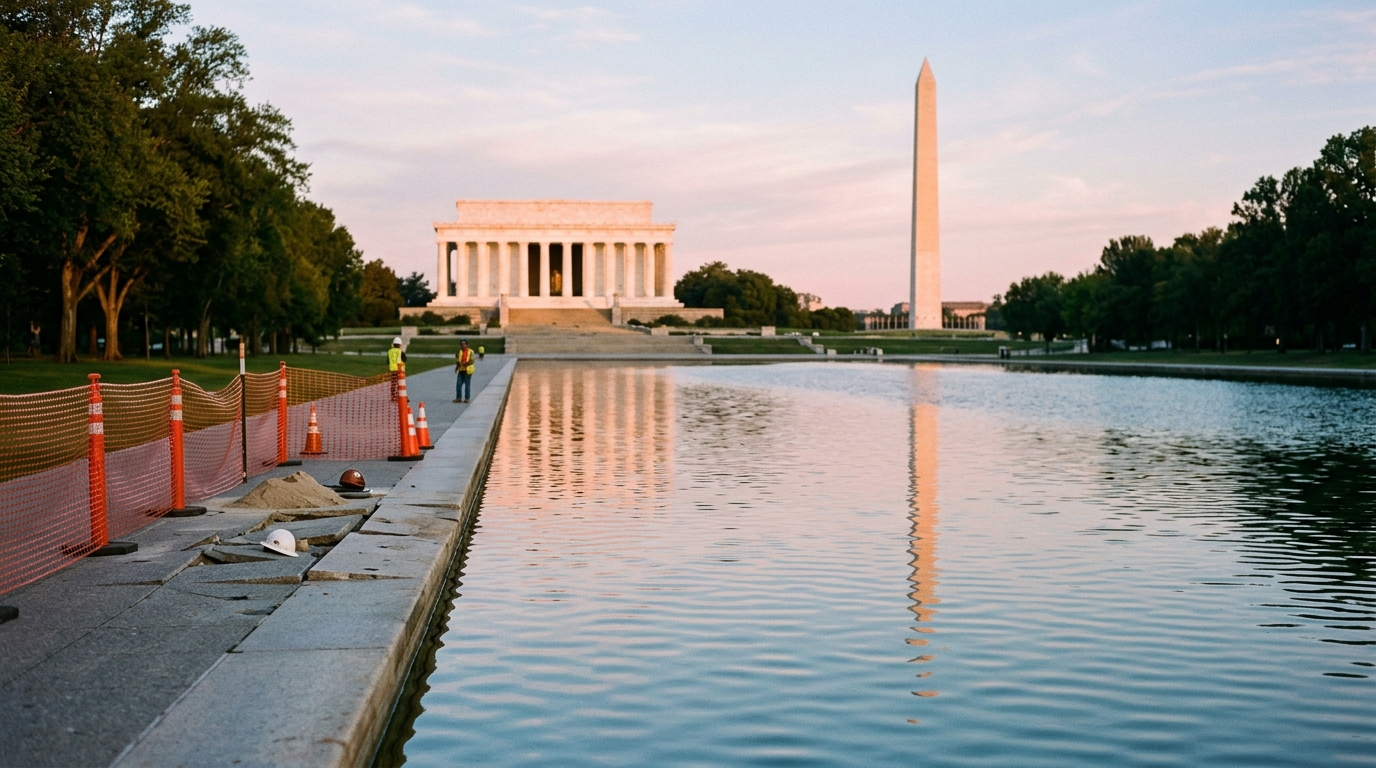
Contractor Takes Blame for Reflecting Pool Damage, Citing Internal Errors
A contractor has admitted fault for damage to the Lincoln Memorial Reflecting Pool, stating the issues were due to their own errors, not vandalism. This clarifies the cause of problems at the iconic Washington, D.C. landmark.

Arlington's "Read & Run" Event Invites Residents to Explore Local Gems