Bee Swarm Sighting Near Farragut North Metro Prompts Call for Community Awareness
Share this article
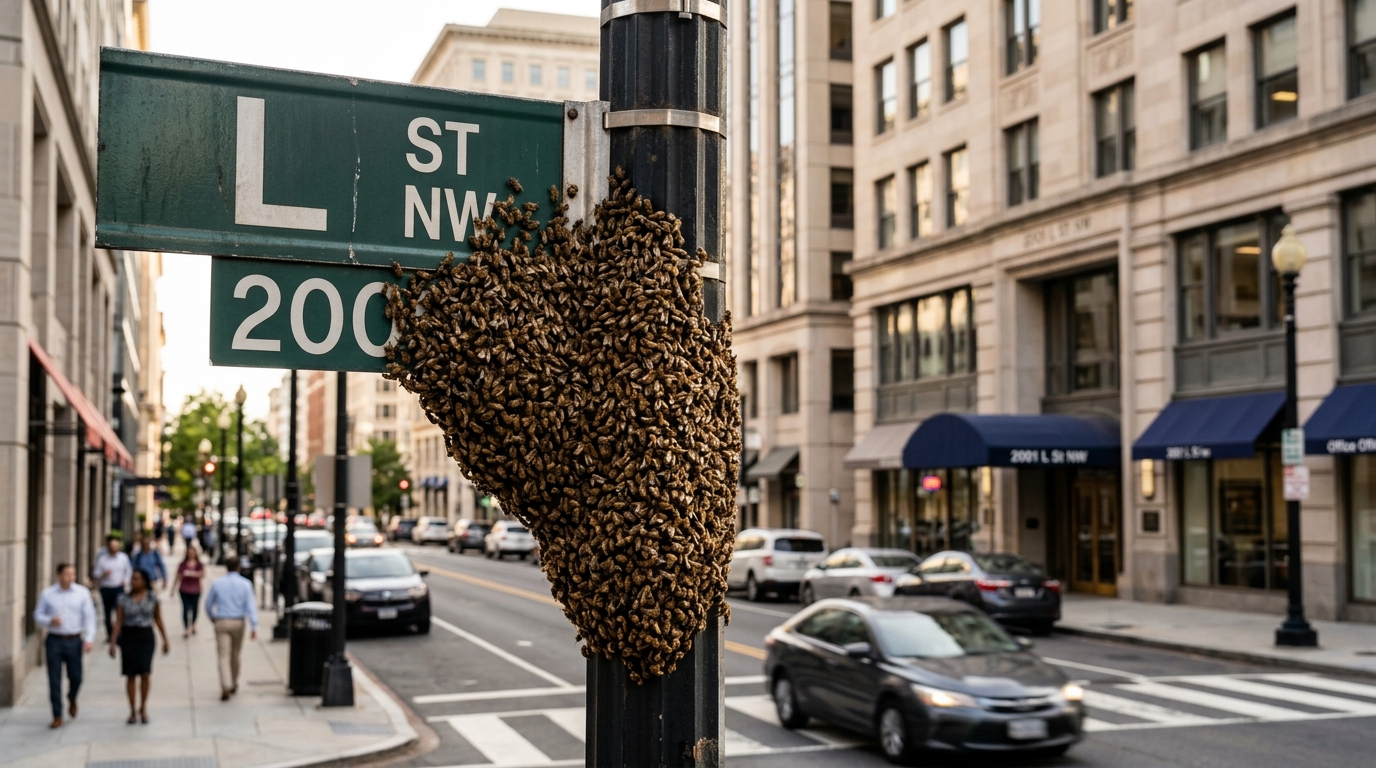
A notable bee swarm recently captivated onlookers near the Farragut North Metro station in downtown Washington, D.C., drawing attention to the often-unseen natural world thriving amidst the urban landscape. The cluster of bees was observed on L Street NW, specifically in front of a My Eye Dr. establishment, prompting a local resident to share the unusual sight [1].
The sighting, reported by Brice to local blog Popville, highlighted a natural phenomenon that can be startling but is typically harmless when handled correctly. According to Brice, the swarm was discovered while walking from the Metro toward 18th Street [1].
Understanding Urban Bee Swarms
Bee swarming is a natural and essential part of a honeybee colony's life cycle, typically occurring in the spring and early summer. It's how a colony reproduces. When a hive becomes too crowded, the old queen bee leaves with roughly half of the worker bees to find a new home. The remaining bees raise a new queen in the original hive.
During this transitional phase, the swarm will cluster together on a temporary resting spot, such as a tree branch, lamppost, or even a building facade, as seen on L Street NW [1]. Despite their appearance, swarming bees are usually docile. They are engorged with honey from their old hive, making them less inclined to sting, as their primary focus is finding a new permanent residence. Disturbing them, however, can provoke a defensive reaction.
For D.C. residents, encountering a swarm is a relatively common occurrence, especially as urban green spaces and backyard gardens provide increasing habitat for pollinators. The presence of these swarms underscores the vital role bees play in the city's ecosystem, from pollinating urban gardens and street trees to contributing to local biodiversity.
The Role of the DC Beekeepers Alliance
When a bee swarm is spotted in the District, the most responsible action is to contact local experts rather than attempt to handle it independently. The DC Beekeepers Alliance is the primary resource for swarm removal in Washington, D.C. This volunteer organization comprises experienced beekeepers who safely collect swarms and relocate them to suitable apiaries, ensuring the bees' survival and preventing potential conflicts with residents [1].
Their swift response is crucial because if left undisturbed in an undesirable location, a swarm might choose to establish a permanent home in a wall cavity or chimney, leading to more complex and costly removal challenges later on. The Alliance provides an invaluable service, not only for public safety but also for the health of the bee population in the city.
Why Bees Matter in the City
Bees are essential pollinators, playing a critical role in the reproduction of many plants, including those that produce fruits, vegetables, and nuts. In an urban environment like Washington, D.C., healthy bee populations contribute significantly to the success of community gardens, rooftop farms, and even the ornamental plants that beautify our streets and parks. The decline in global bee populations due to habitat loss, pesticide use, and climate change makes local efforts to protect and support bees even more important.
The District Department of Energy & Environment (DOEE) emphasizes the importance of pollinators and provides resources for residents to create pollinator-friendly habitats. From planting native flowers to avoiding harmful pesticides, individual actions can collectively make a difference in supporting these vital insects.
What to Do If You See a Swarm
Encountering a bee swarm can be alarming, but knowing the correct steps ensures both public safety and the welfare of the bees. The most important advice is to remain calm and keep a safe distance. Do not spray the bees with water, throw objects at them, or attempt to cover them, as these actions can agitate the swarm and make them defensive.
Instead, immediately contact the DC Beekeepers Alliance. Their trained volunteers are equipped to safely remove and relocate the bees without harming them or people nearby. This service is typically free of charge, reflecting the beekeepers' dedication to conservation and community well-being.
For more general information on bee behavior and their ecological significance, resources like the University of Maryland Extension offer comprehensive guides for both urban and rural residents.
📍 Local Resources
Volunteer organization dedicated to promoting beekeeping and safely removing bee swarms in Washington, D.C.
Provides information and resources on urban wildlife, including pollinators, and environmental stewardship in D.C.
For non-emergency city services or to report urban wildlife concerns if direct contact with a specialized organization is not immediately successful.