Arlington Voters Back Move to Two Congressional Districts
Share this article
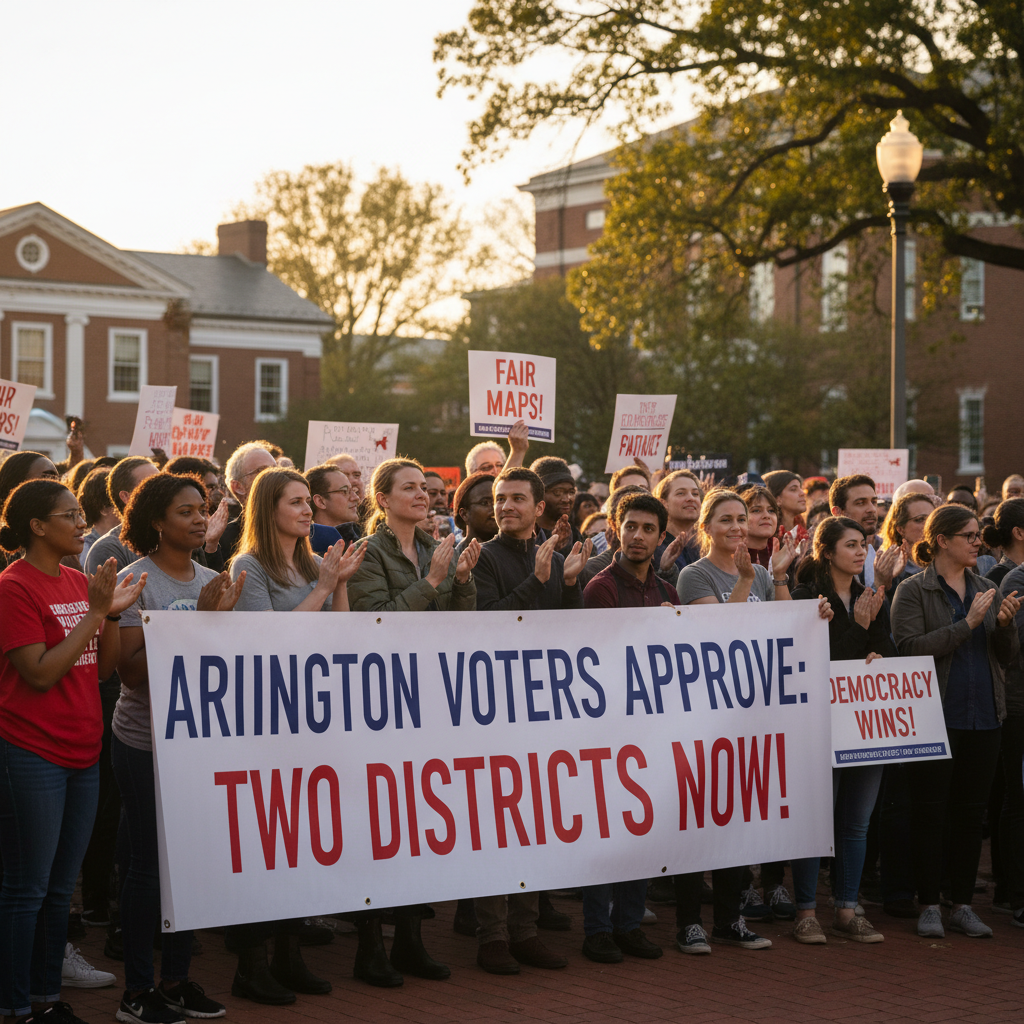
Arlington County voters have overwhelmingly expressed their support for a significant change in their representation, backing a move that would see the county split into two distinct congressional districts. This decision, reported recently by ARLnow[1], signals a notable shift in how the Northern Virginia locality could be represented in the U.S. House of Representatives.
The outcome of the local vote reflects a strong desire among Arlington residents for this restructuring, which could have profound implications for the county's political landscape and its influence on Capitol Hill. While the specific details surrounding the implementation of such a change would involve state-level legislative action and the work of Virginia's redistricting authorities, the local referendum provides clear direction from the electorate.
Understanding the Shift to Two Districts
Currently, Arlington County is primarily situated within a single congressional district. The proposed change to two districts would mean that residents would fall under the purview of two different U.S. Representatives. This could lead to a broader range of issues being addressed by their elected officials, as each representative would likely have a slightly different constituency and set of priorities within their respective district boundaries.
The process of redrawing congressional district lines, known as redistricting, is a complex and often contentious undertaking that typically occurs every ten years following the U.S. Census. In Virginia, this process involves a combination of legislative action and, more recently, a state redistricting commission. Local voter input, as demonstrated in Arlington, can play a crucial role in shaping these discussions and influencing legislative decisions at the state level. Information on the broader electoral process in the Commonwealth can be found on the Virginia Department of Elections website.
Implications for Arlington's Political Future
The decision by Arlington voters could have several long-term implications. On one hand, having two representatives could provide more direct access and advocacy for different parts of the county, potentially leading to increased federal funding or attention for specific local projects. For example, areas closer to the Potomac River might share more interests with neighboring districts, while western Arlington might align with different regional concerns.
On the other hand, splitting the county could dilute its collective political power if the two representatives are not aligned on key issues affecting Arlington as a whole. However, the overwhelming support from local voters suggests a prevailing belief that the benefits of dual representation outweigh potential drawbacks. The Arlington County government will likely be a key partner in any state-level discussions regarding the precise boundaries and implementation of these new districts.
The legislative mechanism for enacting such a change involves the Virginia General Assembly, which holds the ultimate authority over the state's congressional map. While the local vote is a powerful statement of intent, it serves as a recommendation to state lawmakers and the Virginia Redistricting Commission, which is tasked with drawing fair and equitable district lines. More information about the principles guiding the redistricting process can often be found through state legislative resources, such as those related to Virginia's election laws.
What Comes Next?
Following the clear mandate from Arlington voters, the focus will now shift to how this local preference will be incorporated into future redistricting efforts. While the most recent statewide redistricting occurred after the 2020 Census, the overwhelming local backing for this change could prompt special consideration or become a significant factor in the next redistricting cycle, or even an earlier legislative push if deemed feasible. It's important for residents to stay informed about the legislative process and how proposed maps might affect their neighborhoods. Further details on how congressional districts function at a national level are available on the U.S. House of Representatives website.
The move to two congressional districts for Arlington County represents a proactive step by local voters to redefine their federal representation. As the process unfolds, continued engagement from residents and transparent communication from local and state officials will be crucial to ensure the outcome truly serves the community's best interests.
📍 Local Resources for Arlington County Residents
Provides information on voter registration, election dates, polling locations, and absentee voting for all Arlington residents.
The legislative body for Arlington County, overseeing local governance and representing community interests.
A non-partisan organization dedicated to informing voters and promoting active participation in government.
- Arlington looks toward two congressional districts after local voters overwhelmingly back change. ARLnow. [1]
Explore more on this topic
Related Stories

FBI and Postal Service Investigate Suspicious Mail to Congressional and Election Offices Across the DMV
Federal authorities are investigating letters containing suspicious substances sent to congressional and election offices across the DMV. The FBI and U.S. Postal Inspection Service are leading the joint probe, highlighting concerns for public safety and the integrity of democratic processes in the region.
Virginia Attorney General Establishes New Voter Protection Unit
Maryland's Political Slogans: Catchy Campaigns That Often Fade Away
Political slogans are powerful tools during Maryland elections, but they often vanish once the ballots are counted, giving way to the practical language of governance.