Community
Howard County
Self-Driving Delivery Robots Begin Rolling Out on Arlington Sidewalks
Share this article
Advertisement
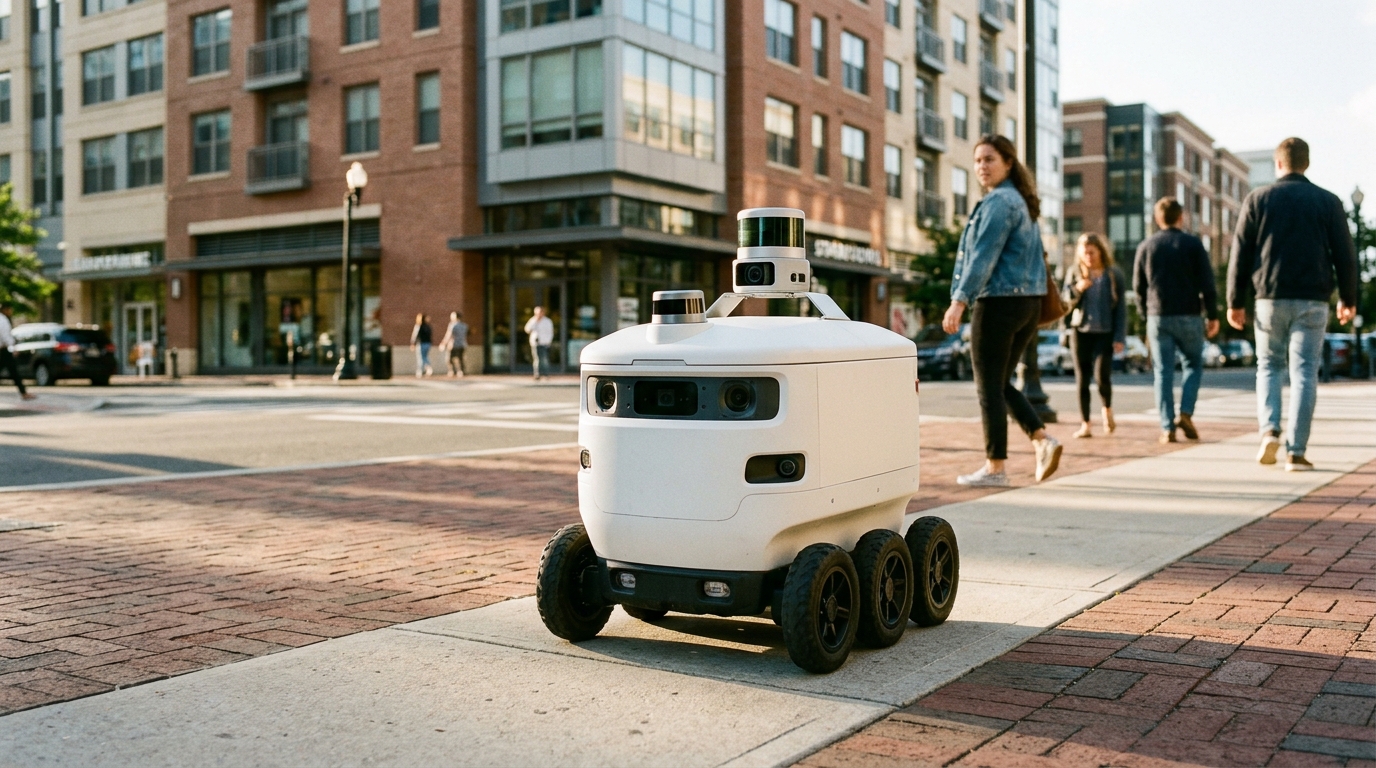
Imagine strolling down a familiar Arlington sidewalk, perhaps near Clarendon or along Columbia Pike, and seeing a small, boxy vehicle silently rolling past you, carrying someone's dinner or groceries. That vision is now becoming a reality. Self-driving delivery robots have officially started to explore the sidewalks of Arlington, marking a new chapter in how goods might move through our bustling urban landscape [1]. This isn't a scene from a futuristic movie; it's happening right here in the DMV. The arrival of these autonomous couriers signals an evolving approach to "last-mile" delivery – the crucial final leg of getting products from a distribution center or local store directly to a customer's doorstep. For Arlington residents, it means a potential shift in how we receive everything from takeout meals to online purchases.
Navigating Arlington's Urban Environment
Arlington, with its dense neighborhoods, vibrant commercial corridors, and a strong emphasis on walkability, presents an interesting proving ground for this kind of technology. These robots are designed to operate alongside pedestrians, using an array of sensors and artificial intelligence to navigate sidewalks, avoid obstacles, and obey traffic signals where applicable. Their "exploration" phase suggests a period of active testing and data collection, allowing the technology to adapt to the unique challenges of Arlington's urban environment Arlington County Government. The concept behind these robots is to offer a more efficient, potentially more sustainable, and increasingly contactless delivery option. They could alleviate some of the traffic congestion caused by traditional delivery vans and reduce carbon emissions, aligning with many of the county's environmental goals. As they learn the routes and nuances of Arlington's sidewalks, they're likely to become a more common sight for residents and local businesses alike.Implications for Residents and Businesses
For local businesses, especially restaurants and small retailers, these robots could offer a new avenue for reaching customers. Imagine a local eatery in Ballston or Courthouse using a fleet of these robots to expand its delivery radius or handle peak-hour demand without needing additional human drivers. This could translate into faster service and potentially lower delivery costs for consumers. However, the introduction of any new technology on public rights-of-way also brings questions and considerations. How will these robots interact with pedestrians, especially children, the elderly, or those with disabilities? What are the safety protocols in place? And how will local regulations adapt to ensure a smooth coexistence between human and robotic foot traffic? The Virginia Department of Transportation (VDOT) continuously evaluates new transportation technologies, and this rollout will undoubtedly contribute to ongoing discussions about autonomous vehicle integration at various scales.Self-driving delivery robots are now actively exploring Arlington's sidewalks, signaling a new era for local 'last-mile' delivery services.
This initial phase, described as "exploring the sidewalks" by ArlNow[1], implies a cautious and data-driven rollout. It's a chance for the technology providers to fine-tune their systems in a real-world setting, and for the community to get acquainted with these new neighbors. The Future of Delivery in the DMV
The presence of self-driving delivery robots in Arlington isn't just about convenience; it's a peek into the future of urban logistics across the entire DMV region. As technology advances, we're likely to see more autonomous solutions integrated into our daily lives, from public transit to personal vehicles. This local deployment in Arlington could serve as a model, or at least a valuable case study, for other jurisdictions considering similar initiatives. Residents can expect to see these robots more frequently as their operations expand. It's a development that prompts us to consider both the excitement of innovation and the practical adjustments needed to integrate new technologies seamlessly into our community. What will this mean for walking around your neighborhood? Only time, and continued observation, will tell.Advertisement
Explore more on this topic
Related Stories
Community
Virginia Mom Channels Grief into Lifesaving Seatbelt Advocacy for Teens
Arlington County·Community
A Virginia
3 days ago4 min read
Community
Maryland Bakery Rebrands, Expands Training for Adults with Disabilities
Montgomery County·Community
4 days ago4 min read
Community
Dupont Circle Braces for Annual 'Epic' Rummage Sale at St. Margaret's Episcopal Church This Saturday
Community
St. Margaret's Episcopal Church in Dupont Circle is holding its "epic" annual rummage sale this Saturday, October 17. The one-day event promises clothing, jewelry, housewares, and more, with all proceeds supporting church ministries and donations benefiting local nonprofits like Charlie's Place.
4 days ago4 min read