Appeals Court Halts Contempt Probe into Trump-Era Deportation Flights from Washington D.C. Federal Judge
Share this article
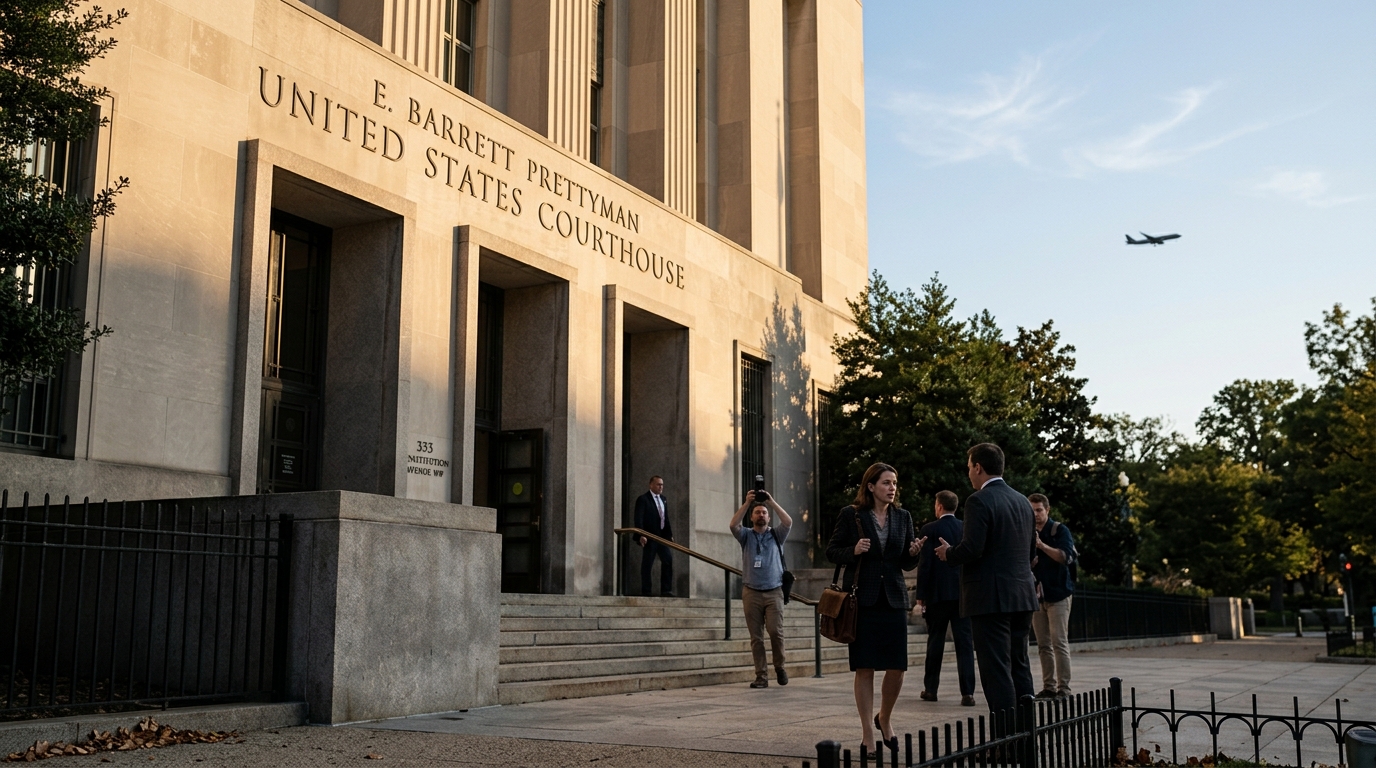
WASHINGTON, D.C. — A federal appeals court in Washington, D.C., has mandated the cessation of a contempt investigation initiated by a district court judge into the Trump administration's handling of deportation flights in March 2025. The U.S. Court of Appeals for the District of Columbia Circuit ruled that Chief Judge James Boasberg had "abused his discretion" by proceeding with criminal contempt proceedings related to the flights, which involved Venezuelan migrants being sent to El Salvador.
The decision, handed down by a divided three-judge panel on Tuesday, April 2026, marks a significant development in the legal challenges surrounding federal immigration enforcement actions. It underscores the appellate court's role in overseeing the scope and conduct of lower court proceedings, particularly when they involve the executive branch.
Background of the Contempt Investigation
The controversy stems from deportation flights conducted in March 2025, which aimed to transport Venezuelan migrants to El Salvador. These flights proceeded despite a prior order from the U.S. District Court in Washington, D.C., to halt such actions. Chief Judge James Boasberg, an appointee of Democratic President Barack Obama, subsequently launched a criminal contempt investigation into the Trump administration, asserting that its actions constituted a failure to comply with a direct court order [1].
The investigation sought to determine whether the administration had deliberately defied the court's directive, potentially leading to sanctions for contempt. Such proceedings are rare and carry serious implications for the relationship between the judiciary and the executive branch, especially concerning immigration policies which often fall under presidential authority.
Appeals Court Reverses Course
The majority opinion from the D.C. Circuit Court of Appeals, authored by Circuit Judge Neomi Rao, a nominee of Republican President Donald Trump, found Boasberg's investigation "intrusive" and an overreach of judicial authority. The panel concluded that the Trump administration possessed a "clear and indisputable" right to have the contempt proceedings terminated [1]. This ruling effectively shields former administration officials from potential criminal contempt charges related to the 2025 flights.
The decision highlights the often politically charged nature of judicial appointments and their potential impact on legal outcomes. While judges are expected to rule impartially, the differing perspectives between judges nominated by different administrations can sometimes lead to divergent interpretations of law and judicial power. The U.S. Court of Appeals for the District of Columbia Circuit is frequently involved in high-profile cases challenging federal government actions, given its unique jurisdiction over the nation's capital.
What This Means for D.C.'s Federal Judiciary
This ruling reinforces the boundaries of judicial oversight into executive branch actions, particularly in areas like immigration where presidential authority is often broad. For the federal judiciary in Washington, D.C., the decision could influence how future contempt proceedings against government officials are approached. It sets a precedent that appellate courts may intervene swiftly to curtail investigations they deem beyond the appropriate scope of judicial power.
The case also underscores the ongoing legal battles and scrutiny surrounding immigration policies. Federal courts in the DMV region, including the U.S. District Court for the District of Columbia, are frequently at the forefront of these challenges, given their proximity to federal agencies and the seat of government. Understanding the nuances of federal immigration law and policy is crucial, as detailed by resources like the Department of Homeland Security's immigration statistics.
The D.C. Circuit's order effectively closes a chapter on a contentious legal battle, preventing further judicial inquiry into the specific actions of the Trump administration regarding the 2025 deportation flights. The decision highlights the complex interplay between judicial review, executive power, and the broader political landscape in Washington, D.C.
Explore more on this topic
Related Stories

Baltimore Seeks Dismissal in Ongoing Harborplace Lawsuit
Baltimore City has asked a court to dismiss a lawsuit challenging the future of its iconic Harborplace development, a move that could significantly impact the long-awaited revitalization efforts for the downtown waterfront.

Reston Man Faces Murder Trial After Allegedly Fatally Shooting Roommate Hours Post-Release
A Reston man is headed to trial for allegedly murdering his roommate just hours after being released from Fairfax County Sheriff's custody, prompting community concern.

Bhatt Murder Trial: Prosecution Expected to Conclude Its Case in DMV Court
The prosecution in the Bhatt murder trial is reportedly expected to rest its case, marking a significant development as the DMV court proceedings transition to the defense's presentation.