Politics
Annapolis Lawmakers Trade State House for Main Street: Maryland Legislators Return to Diverse Lives Post-Session
Share this article
Advertisement
As the final gavels fell in Annapolis, signaling the close of the 2026 Maryland legislative session, a familiar rhythm began anew. The bustling corridors of the State House, once vibrant with debate and legislative maneuvering, now settle into a quieter cadence. For Maryland's state lawmakers, the conclusion of their intense legislative duties marks a distinct transition: a return to the varied professional lives they maintain outside the halls of power [1]. This annual shift underscores the unique nature of Maryland's citizen legislature, where public service often intertwines with the demands of everyday careers.
The Citizen Legislator's Dual Role in Maryland
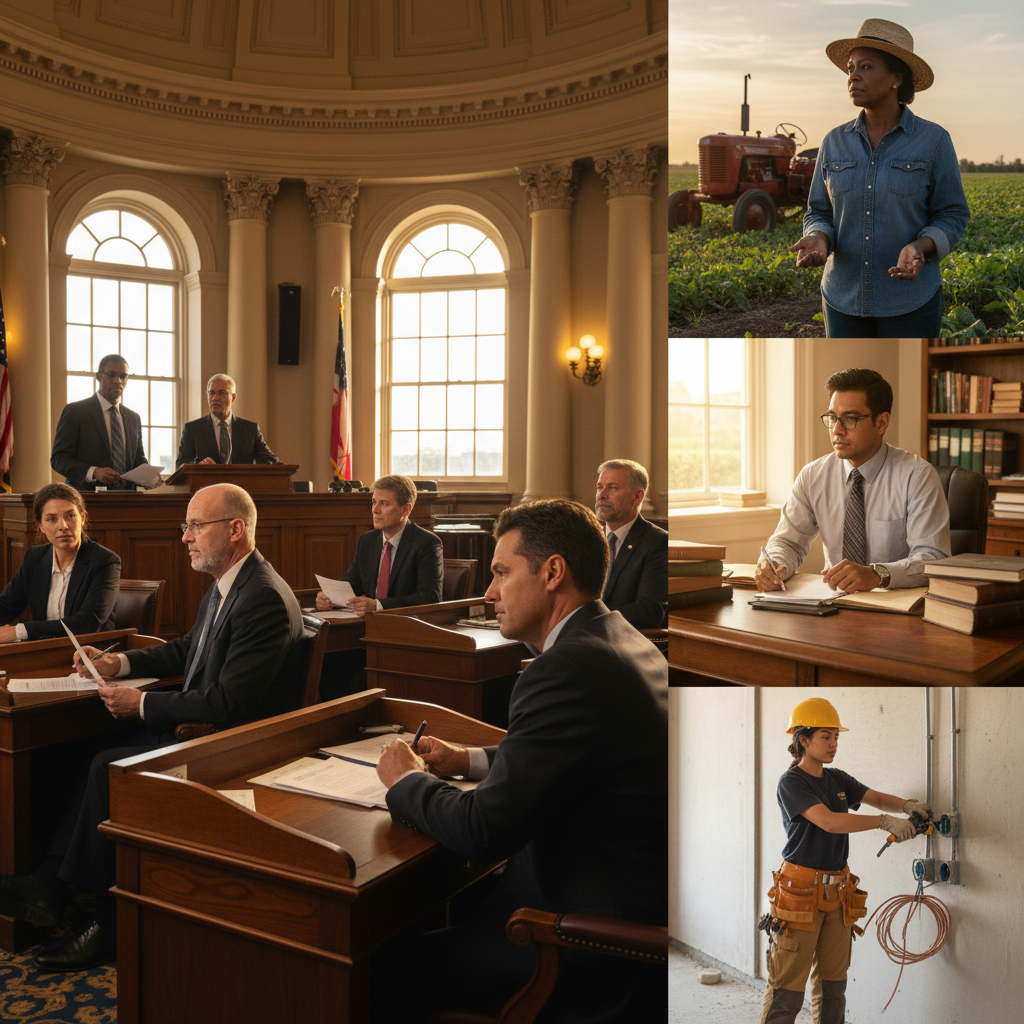
Maryland operates on a system that relies heavily on the "citizen legislator" model, where elected officials balance their public duties with private vocations. This structure means that once the legislative session concludes, the men and women who shaped the state's laws disperse across communities, resuming roles that anchor them deeply within the fabric of Maryland life. Their professional backgrounds are as diverse as the state itself, encompassing a broad spectrum from the agricultural fields of the Eastern Shore to the bustling law offices in Baltimore and the skilled trades across Prince George's County [1].Maryland lawmakers return to careers ranging from farmers, to lawyers, to electricians after the legislative session, reflecting a diverse citizen legislature.
The idea is that these lawmakers bring a grounded, real-world perspective to their legislative work, directly informed by their experiences in various sectors. A legislator might spend a morning debating environmental policy in Annapolis and, weeks later, be tending crops as a farmer, experiencing firsthand the very regulations they helped craft. Others might transition from intricate legal discussions on the Senate floor to client meetings in a downtown Annapolis law firm, or from budget negotiations to electrical work on a residential project. This blend of public service and private enterprise is a defining characteristic of Maryland's legislative body, distinguishing it from full-time professional legislatures found in other states. For more on the state's governmental structure, the official Maryland government website offers comprehensive details. From Annapolis Halls to Main Street Maryland
The transition from the State House to Main Street is not merely a change of scenery; it represents a fundamental shift in daily focus and interaction. During the legislative session, lawmakers are immersed in policy, public hearings, and political negotiations. Their days are often long, filled with committee meetings, floor votes, and constituent outreach within the confines of the state capital. However, with the session's end, they return to the rhythms of their primary professions, engaging with constituents not just as voters, but as colleagues, clients, or customers. This direct engagement with the daily economic and social realities of their communities is often cited as a strength of the citizen legislator model. It ensures that legislative decisions are not made in a vacuum, but are informed by the practical experiences and challenges faced by everyday Marylanders. The Maryland Manual On-Line provides extensive historical context on the state's legislative traditions.Balancing Public Service and Private Practice
The challenge for these lawmakers lies in effectively balancing the demands of public service with the responsibilities of their private careers. This often requires careful time management, dedication, and a deep commitment to both roles. While the legislative session is a concentrated period, constituent services, interim committee work, and preparation for future sessions continue throughout the year. Lawmakers must navigate these ongoing political duties while also maintaining their professional livelihoods, which can involve managing businesses, serving clients, or fulfilling employment obligations. Understanding the legislative process and how to contact representatives is crucial for residents, and resources like the Maryland General Assembly website are invaluable. This dual existence, while demanding, is a cornerstone of Maryland's governance. It fosters a legislative body that, by its very nature, is deeply embedded in the economic and social fabric of the state it serves. As the quiet descends upon Annapolis, the work of governance continues in a different form, carried out by individuals who live and work alongside their constituents, bringing a tangible, lived experience to the laws they shape.Advertisement
Explore more on this topic
Related Stories
Politics
Councilmember Janeese Lewis George Urges Caution on Waymo Legislation, Citing DC's Jobs Crisis
Howard County·Politics
Ward 4 Councilmember Janeese Lewis George has urged the DC Council to pump the brakes on Waymo legislation this year, warning that rushing autonomous vehicle laws could worsen the city's "jobs crisis" by displacing workers. She emphasizes the need to prioritize safety and worker support alongside technological advancement.
4 days ago6 min read
Politics
Ousted Board of Appeals Chair Sues Howard County Council, Office of Law
Howard County·Politics
Howard County's ousted Board of Appeals chair has filed a lawsuit against the County Council and the Office of Law, initiating a significant legal challenge within the local government structure. This action highlights internal administrative disputes and brings the county's appointment and oversight processes into public scrutiny.
4 days ago5 min read

Politics
Senator Mark Warner to Seek Final Term in Virginia Senate Race Against Military Veteran
Arlington County·Politics
4 days ago4 min read