September 11, 2026(Updated less than a minute ago)
5 min read
Share this article
Advertisement
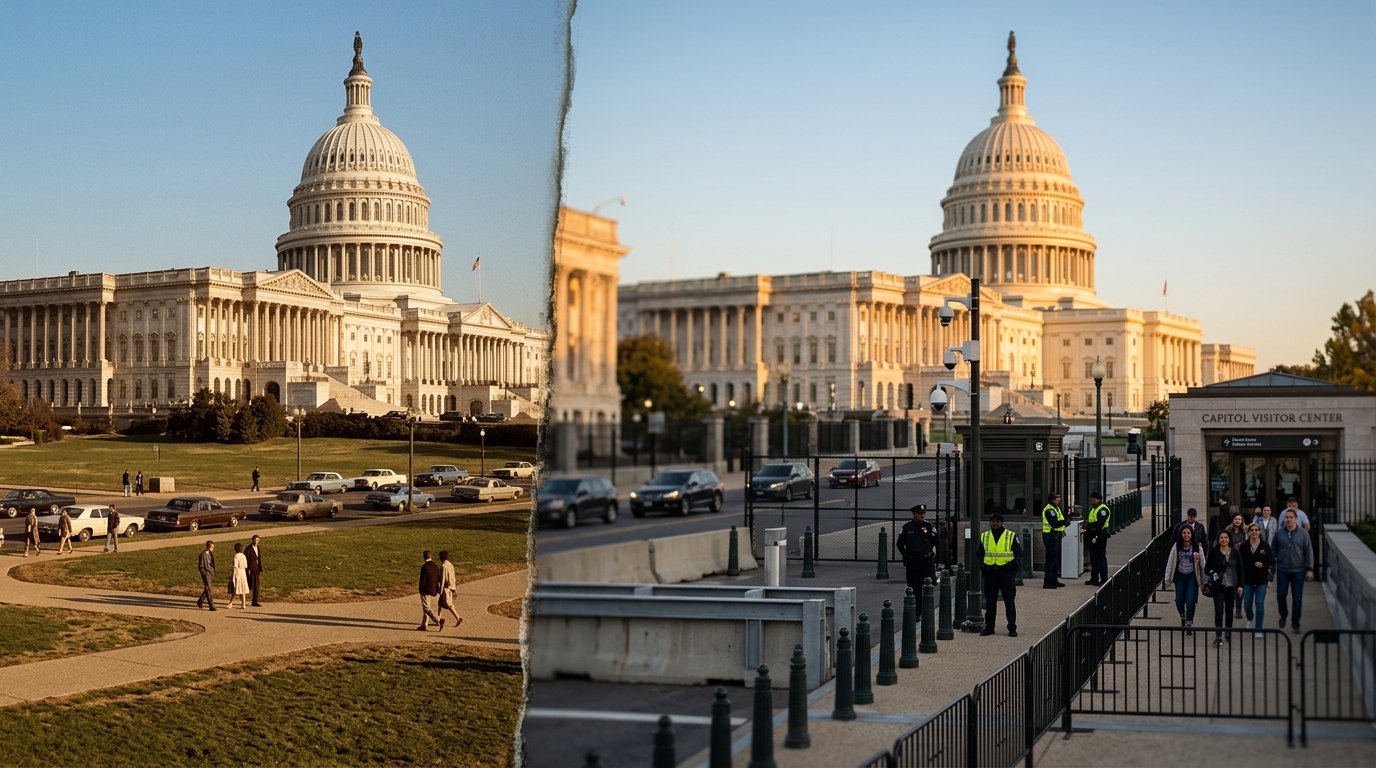
The morning of September 11, 2001, began like any other crisp autumn day in the DMV. But by noon, the landscape of Washington, D.C., and indeed the entire federal government, had irrevocably shifted. The attacks that day, particularly the strike on the Pentagon just across the Potomac in Arlington, Virginia, didn't just rattle the nation; they fundamentally altered how we interact with our government, especially here in the capital region. The U.S. Capitol, once a relatively open symbol of democracy, became a fortress, and federal agencies across the metro area tightened their embrace of security measures that continue to define daily life for millions of DMV residents. Before 9/11, the Capitol grounds were far more accessible. Visitors could often walk right up to the building, enter with minimal checks, and even park their cars on the perimeter. The idea of a hardened perimeter, blast walls, or airport-style security screenings was largely foreign to the seat of American legislative power. The attacks shattered that sense of openness, forcing a stark re-evaluation of how to protect the people and institutions crucial to the nation's governance. ### A New Era of Federal Security The immediate aftermath saw an unprecedented lockdown. Streets around the Capitol, the White House, and other critical federal buildings were cordoned off. Concrete barriers, once temporary fixtures for parades or protests, became permanent additions. The casual strolls across the Capitol lawn or the quick dash into a federal office building for a meeting were replaced by layers of security checkpoints, metal detectors, and heavily armed officers. This wasn't just about deterring future attacks; it was about fundamentally changing the operational posture of every federal entity within the DMV. One of the most visible changes at the Capitol itself was the construction of the U.S. Capitol Visitor Center, which opened in 2008. While conceived before 9/11, its design and implementation were heavily influenced by the new security paradigm. It now serves as the primary public entrance, moving security screenings and visitor queues underground, away from the immediate façade of the Capitol building. This shift provided a necessary buffer, creating a more controlled environment for the millions who visit annually, but also signaling an end to the spontaneous, easy access of yesteryear.
The attacks of September 11, 2001, fundamentally altered the physical and operational security landscape of the U.S. Capitol and federal government agencies across the DMV.
Beyond the physical structures, the very culture of federal security underwent a dramatic transformation. Agencies previously focused on specific threats or mandates found themselves part of a larger, integrated national security apparatus. The creation of the Department of Homeland Security (DHS) in 2002 consolidated 22 different federal agencies, including the Secret Service, Coast Guard, and FEMA, under one umbrella, representing a massive governmental restructuring aimed at preventing and responding to terrorism. This reorganization ripple-effected through every federal office in the DMV, from new identification requirements for entry to heightened vigilance in daily operations. ### Impact on DMV Life and Commuting For the millions of people who live and work in the DMV, these changes weren't abstract; they were tangible parts of daily life. Federal employees, who form a significant portion of the region's workforce, now navigate stricter access protocols, often requiring enhanced security clearances and undergoing more frequent background checks. Commuting to and from federal workplaces, whether in downtown D.C., Crystal City, Bethesda, or Quantico, often involves passing through multiple layers of security. The fortified nature of federal facilities also altered the urban fabric of the region. Streets that once flowed freely around government buildings now feature bollards, crash barriers, and restricted vehicle access. This has reshaped traffic patterns and pedestrian routes, particularly in areas like Capitol Hill and the Federal Triangle. While these measures are crucial for security, they've undeniably changed the feeling of openness and integration that once characterized the capital's public spaces. The U.S. Capitol Police, for instance, saw its role and resources significantly expanded, becoming a more visible and active presence in and around the legislative complex. The shift extends to how government operates internally. Information sharing between intelligence agencies, once a significant challenge, became a paramount concern, leading to new protocols and technologies designed to connect disparate federal entities more effectively. This focus on integrated intelligence and coordinated response remains a cornerstone of federal security policy, driven directly by the lessons learned on 9/11. As we reflect on the two decades since the attacks, the transformation of the U.S. Capitol and the federal government serves as a constant reminder of that fateful day. The balance between security and accessibility, between an open democracy and a protected one, continues to be a defining challenge for the DMV and the nation. These changes, born from tragedy, have woven themselves into the very fabric of our capital, shaping how we live, work, and interact with the institutions that govern us. The conversation about security and public access at federal facilities is an ongoing one. DMV residents should stay informed about evolving security protocols, particularly when planning visits to federal buildings or navigating downtown areas. These measures are here to stay, and understanding them is key to moving through our transformed capital region.