250-Foot Triumphal Arch Proposed for Memorial Circle in Arlington
Share this article
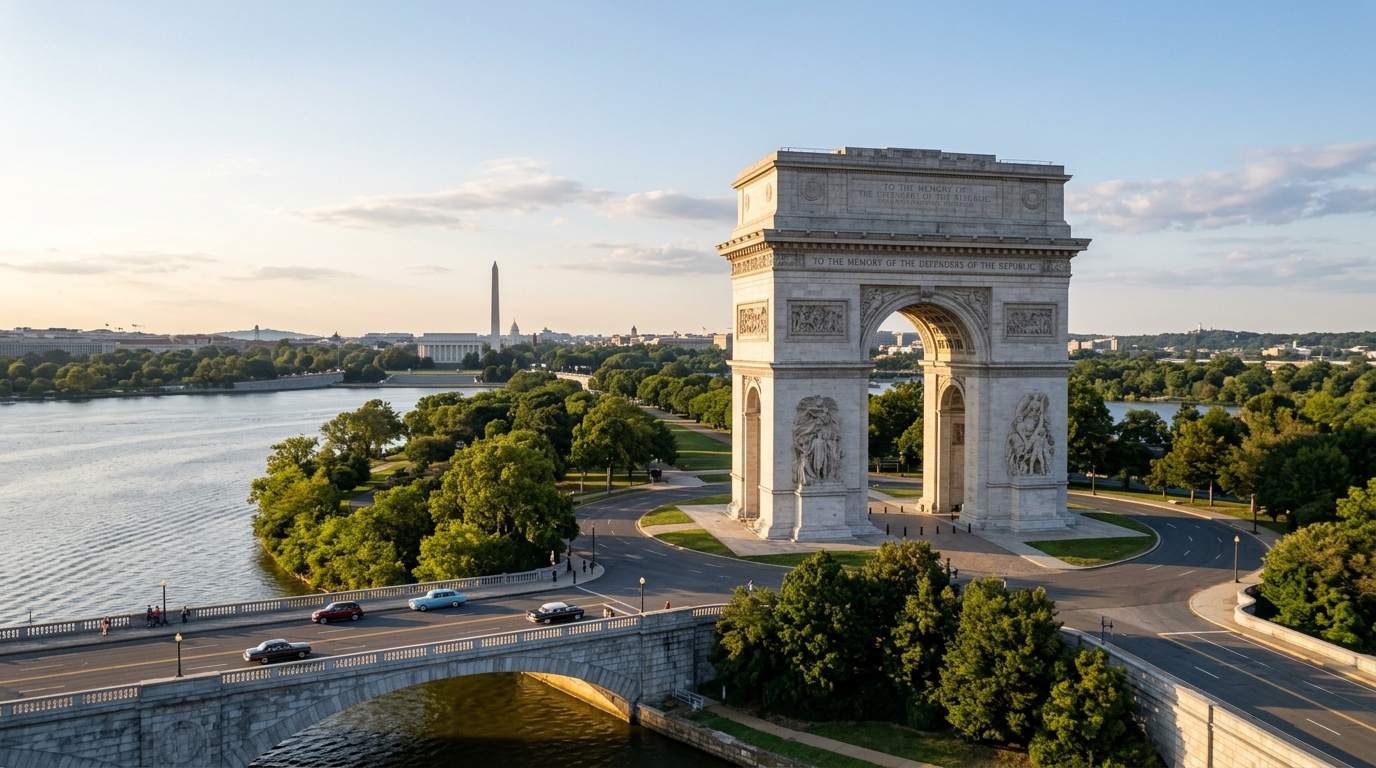
ARLINGTON, VA – A monumental proposal has emerged for Memorial Circle, the prominent traffic nexus at the foot of Arlington Memorial Bridge, with detailed architectural plans submitted for a towering 250-foot triumphal arch. The plans, reportedly put forth by the Trump administration, envision a grand structure that would dramatically redefine the gateway between Washington, D.C., and Arlington, Virginia [1].
The 12-page filing, prepared by Harrison Design, outlines a structure that would stand taller than many existing monuments in the nation's capital, including the Washington Monument, which measures approximately 555 feet, and the Lincoln Memorial, which is about 99 feet tall. Its proposed location at Memorial Circle places it at a critical juncture of national significance, directly adjacent to Arlington National Cemetery and serving as a ceremonial entrance to the National Mall [1].
A Vision for Memorial Circle
Memorial Circle is more than just a traffic roundabout; it is a hallowed space that connects the solemnity of Arlington National Cemetery with the symbolic heart of Washington, D.C. The proposed arch would introduce a new, imposing architectural element into this historically sensitive landscape. Its design, as depicted in new renderings, suggests a classical triumphal arch, a form historically used to commemorate military victories or significant national achievements.
The sheer scale of a 250-foot structure in this location raises immediate questions about its visual impact on the surrounding viewsheds, particularly from the National Mall and the Potomac River. The area is subject to stringent federal planning and design regulations designed to preserve the monumental core and historic character of the capital region.
Navigating Federal Review and Local Impact
Any large-scale development or monument within the National Capital Region, especially one of this magnitude and prominence, must undergo a rigorous review process involving multiple federal agencies. Key bodies include the National Capital Planning Commission (NCPC), which is the central planning agency for the federal government in the region, and the U.S. Commission of Fine Arts (CFA), which advises on matters of design and aesthetics affecting the capital.
Additionally, the National Park Service (NPS), which manages many federal lands in the area, including the parkland surrounding Memorial Circle and the Arlington Memorial Bridge, would play a significant role in evaluating the proposal. The Department of [...] that submitted the plans, as noted in the source material [1], would also be a key stakeholder in advancing the project through the necessary channels.
Local jurisdictions, particularly Arlington County, would also be keenly interested in the proposal's implications. While Memorial Circle is federal land, a structure of this size could impact local traffic patterns, infrastructure, and the daily lives of residents. Public input and community engagement are typically integral parts of the review process for projects affecting such sensitive and high-profile areas.
Historical Context and Future Considerations
Triumphal arches have a long history, dating back to ancient Rome, often symbolizing military triumphs or the glory of an empire. In a modern context, a 250-foot arch at such a significant American location would undoubtedly become a powerful symbol, though its specific meaning and purpose would be subject to extensive public and political discourse.
The proposal's emergence in 2026, submitted by the Trump administration [1], suggests a forward-looking vision for the capital's monumental landscape. However, the path from concept to construction for federal monuments in the DMV is typically long and complex, often spanning years and requiring broad consensus among various stakeholders, including Congress, federal agencies, and the public. Environmental assessments, traffic studies, and historical impact reviews would also be necessary components of the approval process.
As the plans move through the initial stages of review, DMV residents, commuters, and visitors will likely follow the discussion closely, weighing the architectural ambition against the historical integrity and existing character of one of the region's most iconic locations.
📍 Local Resources: Federal Planning & Design Agencies
Federal agency responsible for planning, urban design, and preservation in the National Capital Region.
Independent agency that advises on matters of design and aesthetics concerning the capital, including monuments and public buildings.
Manages and preserves national parks and monuments, including the lands around Memorial Circle and the National Mall.